Introduction
One will discover how to align artificial lighting with the body’s natural clock, thereby increasing alertness, reducing fatigue, and improving overall productivity while using a standing desk. This guide explains the science behind circadian rhythms, describes the influence of light wavelength and intensity, and provides a practical, step‑by‑step method for designing a personalized lighting schedule. Readers will learn how to evaluate their workspace, select appropriate lighting tools, program automated changes, and monitor outcomes over time. By the end of the article, one will be equipped with a complete system that supports optimal energy levels throughout the workday.
What You’ll Need
- Adjustable LED desk lamp with dimming and colour‑temperature control.
- Smart lighting controller or app capable of scheduling changes.
- Light meter or smartphone app to measure illuminance (lux).
- Circadian Rhythms Book – a concise reference that explains the biological clock and its impact on health.
Step 1: Assess Your Current Lighting Environment
Begin by measuring the existing light levels at the standing desk during morning, midday, and afternoon periods. Use a light meter to record lux values and note the colour temperature (measured in Kelvin). Typical office lighting ranges from 300 to 500 lux with a neutral colour temperature of 4000 K. Document these baseline readings in a simple table; this data will serve as a benchmark for future adjustments. Understanding the starting point is essential because circadian lighting aims to move from bright, blue‑rich light in the morning to warmer, dimmer light in the evening.
Step 2: Learn the Fundamentals of Circadian Light
Consult the Circadian Rhythms Book to grasp how light influences the suprachiasmatic nucleus, the brain region that regulates the sleep‑wake cycle. The book explains that short‑wavelength (blue) light suppresses melatonin production, signalling wakefulness, while long‑wavelength (red‑orange) light promotes melatonin release, encouraging relaxation. Key concepts include peak sensitivity around 460 nm, the importance of light intensity, and the timing of exposure. By internalising these principles, one can design a lighting schedule that mimics natural daylight patterns, thereby supporting hormonal balance and cognitive performance.
Features of the book include clear diagrams, practical recommendations, and a price of $7.77, making it an affordable educational tool. Its rating of 4 out of 5 stars based on four reviews indicates reliable content that has helped other readers improve their well‑being.
Step 3: Determine the Optimal Light Spectrum for Each Work Phase
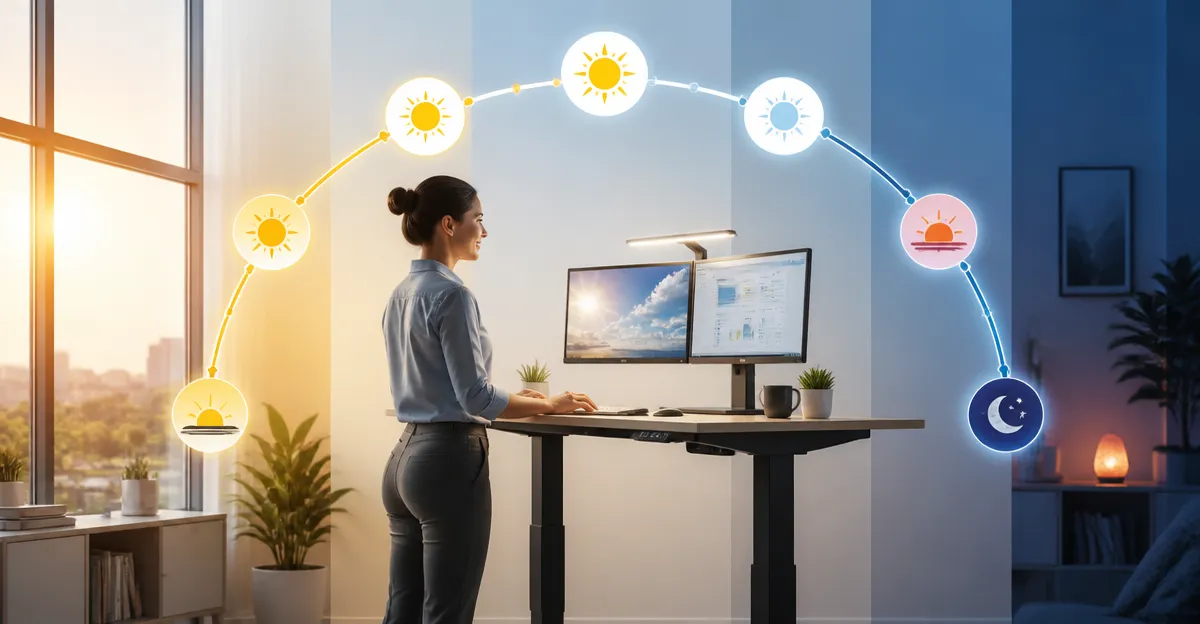
Based on the scientific background, allocate three lighting phases: Morning Boost (07:00‑11:00), Midday Focus (11:00‑15:00), and Evening Wind‑Down (15:00‑19:00). For the Morning Boost, set the lamp to a high colour temperature (6500 K) and an intensity of 500‑600 lux to stimulate alertness. During Midday Focus, maintain a slightly lower temperature (5000 K) with 400‑500 lux to sustain concentration without overstimulation. For the Evening Wind‑Down, transition to warm light (3000 K) and reduce intensity to 200‑300 lux, encouraging the body to prepare for rest. Record these settings in the lamp’s memory or the smart controller’s schedule interface.
Step 4: Program the Lighting Schedule Using a Smart Controller
Open the lighting app and create three distinct scenes that correspond to the phases defined in Step 3. Assign each scene the appropriate colour temperature and brightness values measured previously. Then, set automated transitions that gradually shift colour temperature and intensity over 15‑30 minutes at the start and end of each phase. Gradual changes prevent abrupt visual discomfort and mimic the natural progression of sunrise and sunset. Test the schedule for one full day, noting any discomfort or visual strain, and adjust the transition duration if necessary.
Step 5: Integrate Lighting Adjustments with Standing Desk Movements
Synchronise the lighting phases with the user’s standing‑to‑sitting routine. For example, schedule a brief standing reminder at the midpoint of the Morning Boost phase, when alertness is highest, and a gentle stretch cue during the Evening Wind‑Down phase, when the body is preparing for relaxation. By aligning physical activity with optimal lighting, one enhances both musculoskeletal health and circadian alignment. Document the combined schedule in a digital calendar so that the user can track adherence and make data‑driven refinements.
Tips & Pro Tips
- Place the LED lamp slightly above eye level and angled downward to reduce glare while preserving retinal exposure.
- Use a light‑meter app on a smartphone if a dedicated meter is unavailable; ensure the device is calibrated for accurate lux readings.
- Consider adding a secondary light source, such as a floor lamp with warm colour temperature, for the Evening Wind‑Down phase to create a layered lighting environment.
- Maintain consistent sleep‑wake times; lighting adjustments are most effective when paired with regular bedtime routines.
- Periodically revisit the Circadian Rhythms Book for updates on emerging research and advanced strategies.
Troubleshooting
Problem: Persistent eye strain after implementing the schedule.
Solution: Reduce the brightness of the Morning Boost phase by 50 lux and increase the distance between the lamp and the eyes by a few centimeters. Verify that the colour temperature does not exceed 6500 K, as excessive blue light can cause discomfort.
Problem: Decreased alertness during Midday Focus despite correct settings.
Solution: Ensure the workspace receives adequate natural daylight; supplement with a secondary daylight‑simulating lamp if windows are limited.
Conclusion
One has now learned how to evaluate existing lighting, apply circadian science, set precise colour‑temperature and intensity values, automate transitions, and align these changes with standing‑desk ergonomics. By following the five steps, monitoring outcomes, and adjusting as needed, users can experience heightened energy, sharper focus, and smoother transitions to evening relaxation. The integration of knowledge from the Circadian Rhythms Book ensures that the lighting schedule is grounded in reputable research, making it a sustainable habit for long‑term productivity.
Products Mentioned in This Guide
Frequently Asked Questions
What is circadian lighting and why is it important for standing‑desk users?
Circadian lighting mimics natural daylight cycles, helping sync your body’s clock to boost alertness and reduce fatigue while you work.
How does light wavelength influence my circadian rhythm?
Blue‑rich light (500‑480 nm) signals daytime and raises alertness, whereas warmer, red‑shifted light in the evening promotes melatonin production and relaxation.
What features should I look for in an LED lamp for a circadian schedule?
Choose a lamp with adjustable brightness and colour‑temperature, dimming control, and compatibility with smart scheduling apps.
How can I automate lighting changes throughout the workday?
Use a smart lighting controller or app to set timers that shift colour temperature from cool blue in the morning to warm amber in the late afternoon.
How do I know if my lighting schedule is improving productivity?
Track metrics like perceived alertness, eye strain, and task completion, and use a light meter or app to confirm the planned lux levels are met.