
Standing Desk Tips for Varicose Veins: How to Prevent Pain and Improve Circulation
Introduction
Varicose veins affect millions of individuals who spend long hours on their feet, especially those who use standing desks. This guide explains how to mitigate discomfort, enhance blood flow, and protect vascular health while maintaining productivity. Readers will learn foundational anatomy, ergonomic adjustments, movement strategies, and product recommendations that complement a healthy standing routine. By the end of the article, one will possess a comprehensive plan to reduce swelling, prevent pain, and sustain long‑term circulation benefits.
Background and Context
Varicose veins develop when venous valves become inefficient, allowing blood to pool in the lower extremities. Prolonged static standing increases hydrostatic pressure, which can exacerbate valve dysfunction and lead to edema, aching, and skin changes. Key risk factors include genetics, age, obesity, and occupations that require extended periods of standing. Understanding the physiology of venous return is essential for selecting interventions that promote muscle pump action and reduce venous stasis.
When a person stands, the calf muscle acts as a secondary heart, contracting to push blood upward toward the heart. If movement is limited, this muscle pump operates suboptimally, and blood may accumulate in the superficial veins. Therefore, any standing‑desk strategy must incorporate frequent micro‑movements, proper footwear, and supportive surfaces that encourage natural calf activation.
Ergonomic Foundations for a Healthy Standing Desk
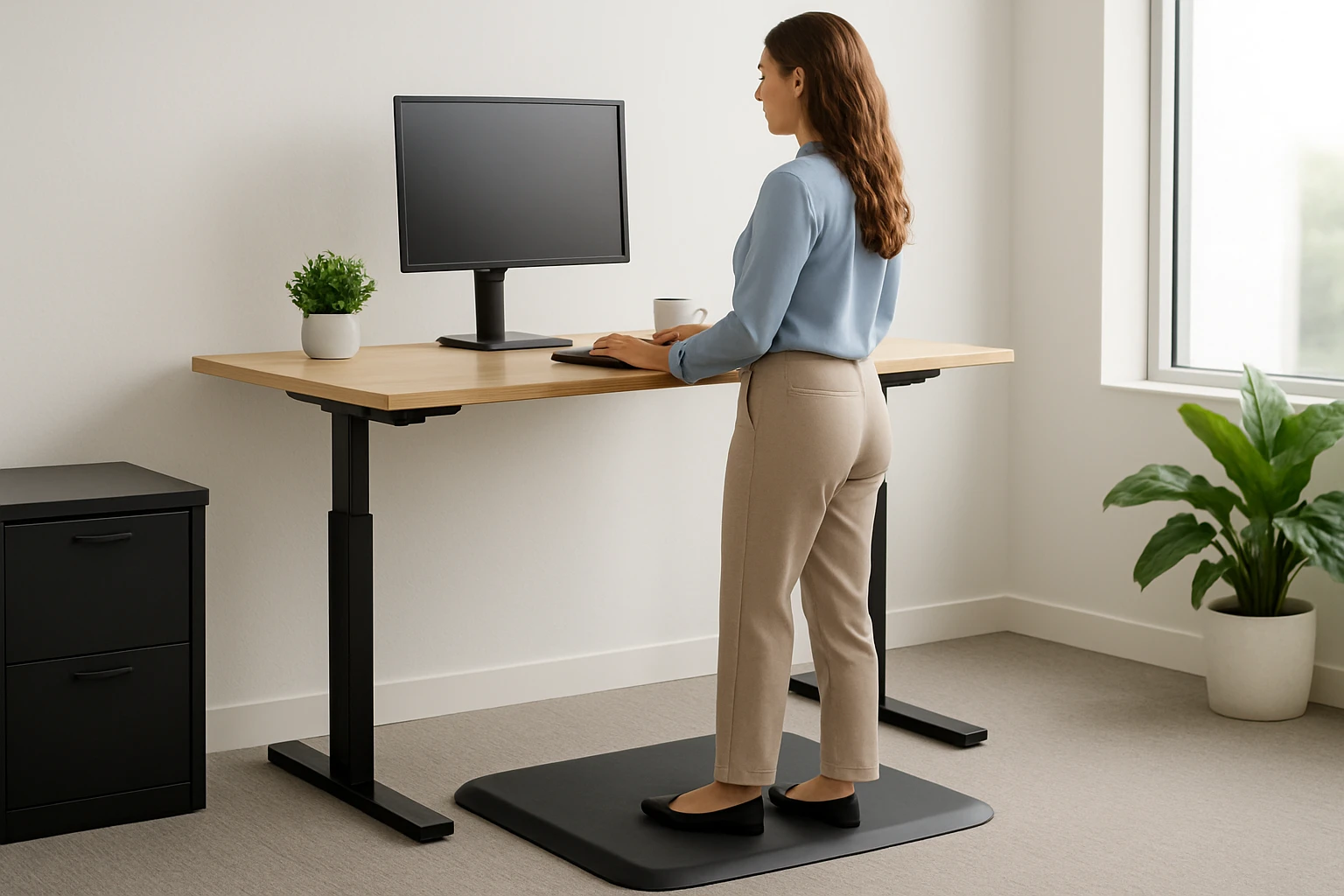
Before adding accessories, ensure the workstation itself follows ergonomic principles. The monitor should sit at eye level, the keyboard at elbow height, and the elbows should form a roughly 90‑degree angle. This posture minimizes shoulder elevation and encourages a neutral spine, reducing overall fatigue that can indirectly affect circulation.
- Adjust the desk height so that the wrists remain straight while typing.
- Use a monitor riser or adjustable arm to achieve the correct visual line.
- Position the mouse close to the keyboard to avoid reaching.
These adjustments create a stable base from which additional circulatory aids, such as anti‑fatigue mats, can be most effective.
Anti‑Fatigue Mats: Enhancing Comfort and Circulation
One of the most impactful accessories for standing‑desk users is an anti‑fatigue mat. These mats provide a cushioned surface that reduces joint compression and encourages subtle postural shifts, which activate the calf muscle pump.
The GelPro Comfort Floor Mat exemplifies a premium option. It measures 20 × 32 inches, offering ample space for a keyboard and mouse. Constructed from ¾‑inch thick Ergo‑Foam, the mat delivers energy‑return polyurethane that absorbs impact without bottoming out. The slip‑resistant bottom prevents sliding, while the non‑toxic top surface is safe for pets and children.
Key specifications include:
- Price: $48.00
- Rating: 4.8/5.0 from 61 reviews
- Features: durable premium foam, stain‑resistant surface, beveled edges for safety
- Warranty: 1‑year manufacturer guarantee
Users report reduced foot fatigue, less knee strain, and even a calmer pet that enjoys the mat as a resting spot. The combination of comfort and durability makes it a valuable addition to any standing‑desk setup.
Movement Strategies to Boost Venous Return
Even with an optimal mat, movement remains the cornerstone of circulation improvement. Incorporate the following micro‑exercises throughout the workday:
- Heel raises: lift heels while keeping toes grounded for 10‑15 repetitions every hour.
- Toe taps: rapidly tap the toes on the mat for 30 seconds to stimulate calf muscles.
- Leg swings: gently swing each leg forward and backward while maintaining balance.
- Weight shifts: alternate weight from one foot to the other every few minutes.
These activities encourage the muscle pump, lower venous pressure, and prevent blood from stagnating in the lower limbs. Pairing them with the GelPro mat enhances proprioceptive feedback, making the exercises feel natural.
Footwear and Compression Options
Supportive footwear complements the anti‑fatigue mat by providing arch stability and shock absorption. Look for shoes with cushioned midsoles, breathable uppers, and a slight heel lift (approximately 1‑2 cm). For individuals with pronounced varicose veins, graduated compression stockings can further assist venous return by applying higher pressure at the ankle and gradually decreasing up the calf.
When selecting compression garments, choose a reputable brand that offers medically graded compression (15‑20 mmHg for mild symptoms, 20‑30 mmHg for moderate). Ensure the fit is snug but not restrictive, and replace the stockings every six months to maintain effectiveness.
Hydration and Lifestyle Considerations
Adequate hydration maintains blood volume and reduces blood viscosity, which facilitates smoother flow through compromised veins. Aim for at least eight glasses of water daily, and consider adding electrolytes if you engage in frequent movement.
Weight management, regular aerobic exercise (such as walking or cycling), and a diet rich in flavonoids (found in berries, citrus fruits, and leafy greens) support vascular health. These lifestyle factors work synergistically with ergonomic interventions to produce lasting benefits.
Comparison and Selection Guide
Choosing the right anti‑fatigue mat depends on several criteria: material quality, size, durability, and price. The table below compares the GelPro Comfort Floor Mat with two common alternatives.
| Feature | GelPro Comfort Floor Mat | Generic Foam Mat | Memory‑Foam Mat |
|---|---|---|---|
| Thickness | ¾ inch Ergo‑Foam | ½ inch low‑density foam | ¾ inch memory foam |
| Durability | High (Texas‑manufactured) | Low (prone to bottoming out) | Medium (may harden over time) |
| Pet‑Safe Surface | Non‑toxic, stain‑resistant | Uncertain | Often contains plasticizers |
| Price | $48.00 | ≈$20.00 | ≈$45.00 |
| Rating | 4.8/5 (61 reviews) | Not available | 3.9/5 (23 reviews) |
For users who prioritize long‑term comfort, pet safety, and warranty coverage, the GelPro mat offers the best value despite a modest price premium. Those on a tight budget may accept a generic mat, but should anticipate more frequent replacement.
Best Practices & Tips
Beyond equipment, adopt the following habits to maximize circulatory health while using a standing desk:
- Alternate between sitting and standing every 30‑45 minutes.
- Maintain a slight bend in the knees rather than locking them.
- Keep the feet hip‑width apart to distribute weight evenly.
- Use a footrest or small step to vary ankle angles.
- Schedule short walking breaks of 3‑5 minutes every hour.
- Monitor any increase in swelling or pain and adjust standing time accordingly.
Integrating these practices with the GelPro Comfort Floor Mat creates a synergistic environment that supports vascular function and overall well‑being.
Frequently Asked Questions
- 1. Does standing longer improve or worsen varicose veins?
- Standing for extended periods without movement can worsen venous pooling, while brief standing intervals combined with regular motion can be beneficial.
- 2. How often should I replace my anti‑fatigue mat?
- High‑quality mats like GelPro typically last 2‑3 years with daily use; replace when the surface hardens or shows visible wear.
- 3. Are compression stockings necessary if I use a standing desk?
- They are not mandatory but can provide additional support for moderate to severe varicose veins, especially during long standing sessions.
- 4. Can I use the GelPro mat in a kitchen as well as an office?
- Yes; the mat is stain‑resistant, non‑toxic, and safe for pets, making it suitable for both culinary and work environments.
- 5. What is the ideal height for a standing desk?
- The desk surface should be at elbow height when the arms are relaxed at the sides, typically 42‑44 cm for most adults.
- 6. Will a standing desk help reduce existing varicose veins?
- It can alleviate symptoms by encouraging circulation, but it does not eliminate existing vein damage; medical treatment may still be required.
- 7. How does the GelPro mat differ from memory‑foam options?
- GelPro uses energy‑return polyurethane that maintains cushioning without hardening, whereas memory foam may lose resilience over time.
Conclusion
Preventing varicose vein pain while using a standing desk requires a multifaceted approach that blends ergonomic setup, movement, supportive footwear, and strategic accessories. The GelPro Comfort Floor Mat offers a durable, pet‑friendly surface that encourages micro‑movements essential for venous return. Coupled with regular heel raises, proper hydration, and occasional compression therapy, one can enjoy the productivity benefits of standing without compromising vascular health.
Products Featured in This Guide
GelPro Comfort Floor Mat
Price: $48.00
Rating: 4.8/5.0 (61 reviews)
Featured because its ergonomic cushioning, pet‑safe surface, and high durability directly support circulation and comfort for standing‑desk users.