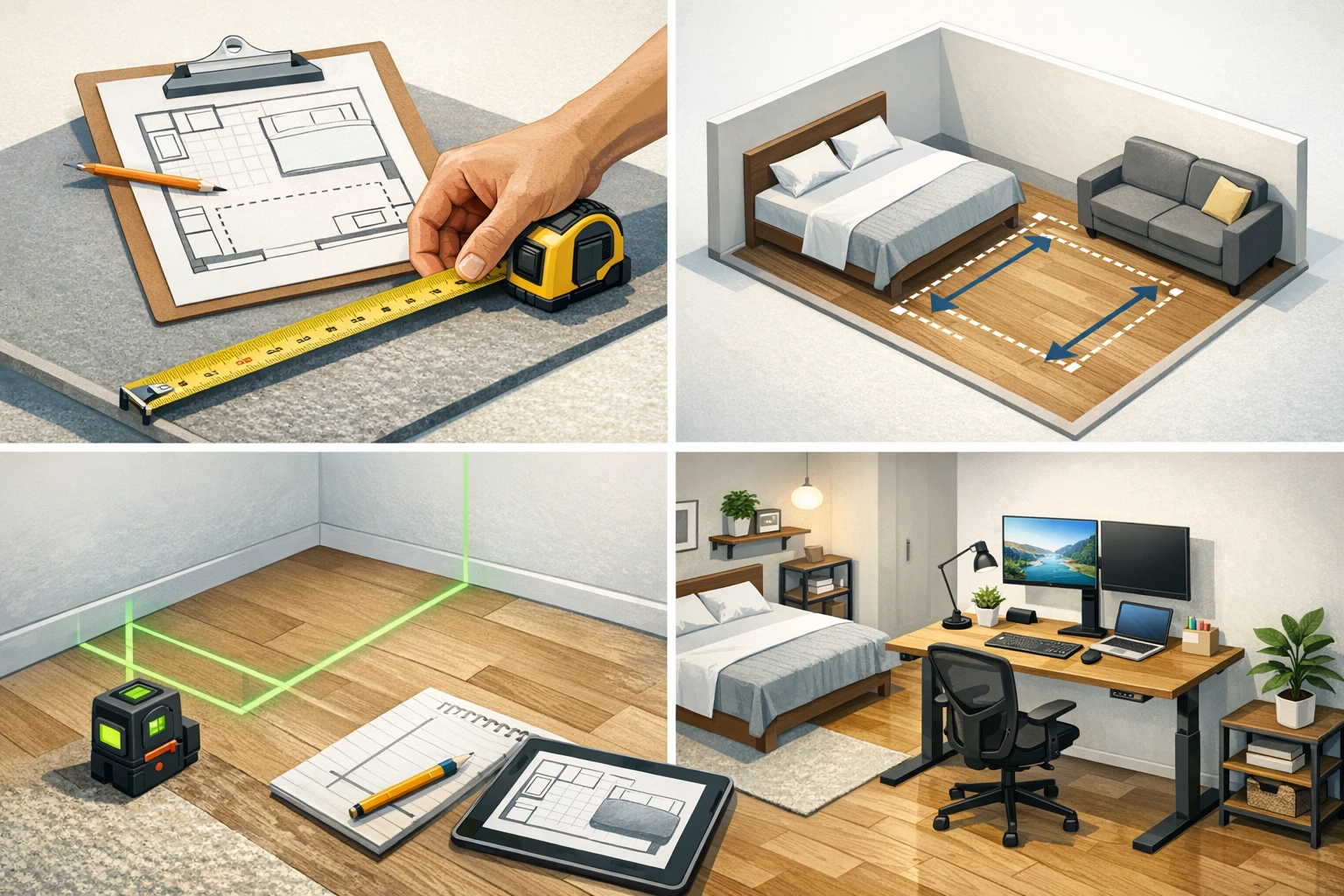
How to Measure Space for a Standing Desk in a Studio Apartment: Step‑by‑Step Guide to the Perfect Fit
Introduction
Choosing a standing desk for a studio apartment requires careful measurement, thoughtful layout, and an awareness of ergonomic principles. This guide will teach readers how to assess floor space, calculate clearance, and verify power and cable requirements. By following each step, one can avoid costly mistakes and create a functional workstation that coexists with limited living area. The information is valuable for anyone who wants to improve health, productivity, and aesthetic harmony in a compact home.
What You'll Need
- Tape measure or laser distance measurer
- Pencil and graph paper or a digital floor‑plan app
- Level and small spirit level
- Power strip with surge protection
- Optional: WOHOMO Folding Computer Desk for quick testing of dimensions
Step 1: Create a Scaled Floor Plan
Begin by drawing a scaled representation of the studio on graph paper, using one square to equal one foot, or by entering room dimensions into a floor‑plan app. Measure the length of each wall, the location of windows, doors, and any built‑in furniture. Include the position of the kitchen counter and bathroom fixtures, because they limit where a desk can be placed. A visual plan helps identify potential zones for a standing desk without obstructing traffic flow.
When measuring, record both width and depth of the open area, noting any protruding elements such as radiator covers or heating vents. Mark the location of existing power outlets and lighting fixtures, as these will influence cable routing. This step lays the foundation for accurate clearance calculations later in the guide.
Step 2: Determine the Desk Footprint Required
Identify the minimum desktop surface you need for your primary tasks, such as a laptop, monitor, and writing space. A typical standing desk surface ranges from 24 to 36 inches wide and 18 to 30 inches deep. Multiply the chosen dimensions by a small buffer of two inches on each side to allow for comfortable arm movement.
For example, a 30‑inch wide desk with a 24‑inch depth occupies 720 square inches, or roughly 5 square feet. Write this footprint on the floor plan and experiment with different orientations to see how the desk fits within the open area. If the footprint intrudes on a traffic lane, consider a narrower model or a foldable option.
Step 3: Measure Clearance for Chair, Movement, and Ergonomics
Even a standing desk may require a chair for occasional seated work. Allocate at least 24 inches of depth behind the desk for a chair seat and leg clearance. Measure the distance from the front edge of the desk to any wall or obstruction; a minimum of 30 inches is recommended to permit comfortable forward lean while standing.
Check the height clearance under the desk when it is at its lowest setting. The space should accommodate the user's thigh length without compression, typically leaving 12 to 14 inches between the floor and the underside of the desktop. If the studio has low ceilings, verify that the highest desk setting does not exceed the user's eye level by more than a few inches.
Step 4: Verify Power Outlet and Cable Management Options
Locate the nearest power outlet to the intended desk position. Measure the length of the power cord on your laptop and monitor, and add a safety margin of six inches. If the outlet is farther than the cord length, plan to use a short power strip placed on the desk surface.
Cable management is crucial in a studio to maintain a tidy appearance. Choose a desk that includes built‑in grommets or a drawer for routing cords. This reduces tripping hazards and preserves the aesthetic of a small living space.
Step 5: Choose the Desk Type That Matches Your Space
Based on the measurements gathered, select a desk that satisfies the footprint, clearance, and ergonomic requirements. The following products illustrate different approaches and are linked at their first mention.
Option A – Compact Foldable Desk
If the studio lacks permanent floor space, a foldable desk provides flexibility. The WOHOMO Folding Computer Desk measures 31.5 inches wide and folds to a slim 2.76‑inch profile, allowing it to be stored behind a door or under a couch when not in use. It weighs only 14.96 pounds, making it easy for one person to move, and the nylon buckle design ensures stability without shaking. At $63.64, it offers a cost‑effective solution with a 4.6‑star rating from over 4,000 reviewers.
Option B – Mobile Standing Desk with Storage
For users who desire height adjustability and on‑board storage, the JOYSEEKER Mobile Standing Desk offers a 23.6‑by‑19.7‑inch desktop, a gas‑spring height range from 27.3 to 43.3 inches, and a built‑in drawer for pens and accessories. The four lockable casters allow smooth movement across carpeted floors, while the low‑profile hidden wheels keep the desk stable at its lowest height. Priced at $159.99 with a 4.8‑star rating from 106 reviews, it balances functionality and mobility.
Option C – Budget Minimalist Desk
When cost is the primary concern, the Sweetcrispy Small Writing Desk provides a 32‑inch surface, a reinforced steel frame, and a particle‑board top that supports up to 176 pounds. Assembly takes less than 30 minutes, and the desk’s modern white finish fits a variety of décor styles. At $20.29 and a 4.6‑star rating from nearly 5,000 reviewers, it delivers durability at a fraction of the price of larger models.
Option D – Desk with Integrated Storage Bag
The NEWBULIG Desk with Storage Bag includes a reversible side pocket that can hold notebooks, chargers, or a small tablet. Its steel frame ensures stability, and the 31‑inch width fits comfortably in most studio layouts. The included tools and clear instructions enable assembly in minutes, and the $30.50 price point makes it an attractive mid‑range option with a 4.5‑star rating.
Option E – Adjustable Standing Desk on Wheels
For users who need a height‑adjustable workstation that can be relocated, the KLSMYHOKI Adjustable Standing Desk offers a range from 27 to 43.5 inches, a 31.5‑by‑16‑inch tabletop, and four lockable wheels. Its double‑support steel frame can hold up to 180 pounds, making it suitable for heavier monitors or dual‑screen setups. Priced at $59.99 with a 4.6‑star rating, it combines affordability with robust construction.
Tips & Pro Tips
- Measure twice, place furniture once: double‑check all dimensions before moving any heavy items.
- Consider a corner placement if the studio has a L‑shaped layout; this maximizes floor space while keeping the desk within arm’s reach of the couch.
- Use a level to ensure the standing desk is perfectly horizontal at each height setting; uneven surfaces can cause strain over time.
- Invest in a cable management sleeve or clip to keep power cords hidden and prevent accidental unplugging.
- If the studio has low ceiling clearance, set the desk at a height that allows the monitor to sit at eye level without requiring a monitor arm.
Troubleshooting
Problem: Desk wobbles after adjustment.
Solution: Verify that all four casters are locked, and place a non‑slip mat under the legs if the floor is slippery. Adjust the leveling feet if the desk model includes them.
Problem: Insufficient power outlets.
Solution: Use a surge‑protected power strip with a short cord and route it through a desk grommet or drawer to keep it out of sight.
Conclusion
Measuring and planning a standing desk for a studio apartment is a systematic process that prevents wasted space and ensures ergonomic comfort. By creating a scaled floor plan, calculating desk footprint, checking clearance, and verifying power access, one can confidently select a desk that fits both physically and stylistically. The recommended products illustrate a range of options from foldable to fully adjustable, each backed by strong customer ratings and competitive pricing. Implement the steps outlined in this guide, and enjoy a healthier, more productive workspace without compromising the limited square footage of a studio home.
Products Mentioned in This Guide
Frequently Asked Questions
How do I determine the minimum floor space needed for a standing desk in a studio apartment?
Measure the desk's footprint and add at least 2‑3 feet of clearance in front and on the sides for chair movement and ergonomic positioning.
What tools are best for creating an accurate scaled floor plan?
A tape measure or laser distance measurer combined with graph paper or a digital floor‑plan app provides precise dimensions.
How much clearance should I leave behind the desk for cable management and power access?
Leave at least 12‑18 inches behind the desk to accommodate power strips, surge protectors, and cable routing.
Can I use a folding desk to test dimensions before buying a permanent standing desk?
Yes, a portable folding desk lets you quickly verify fit, clearance, and ergonomics without committing to a larger purchase.
What ergonomic factors should I consider when positioning a standing desk in a small studio?
Ensure the monitor is at eye level, the keyboard is at elbow height, and maintain a comfortable distance of about an arm’s length to reduce strain.