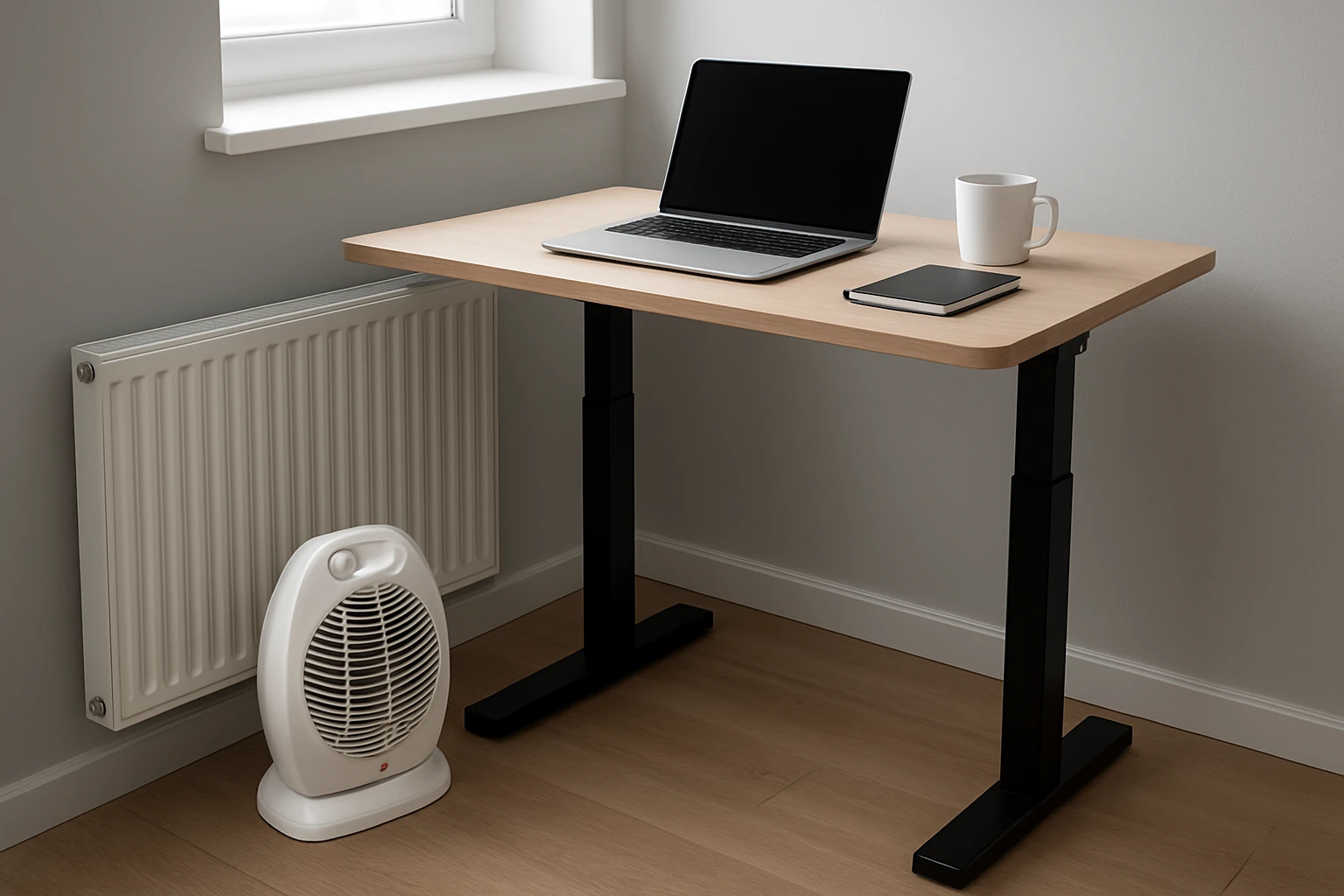
Standing Desk Near Radiators and Heaters: Small‑Room Guide to Safe Distance, Heat Protection, and Comfort
Introduction
In compact living areas, the placement of a standing desk near a radiator or heater often creates a dilemma between ergonomics and safety. This guide explains how to evaluate heat sources, maintain a comfortable working temperature, and protect equipment from thermal damage. Readers will learn distance recommendations, surface‑protection strategies, and product choices that balance affordability with durability. By the end of the article, one will be equipped to design a safe, productive workstation even in the smallest rooms.
Background/Context
Radiators and space‑heaters emit convection currents that raise ambient temperature and can concentrate heat on nearby surfaces. Prolonged exposure may warp wood, degrade electronics, or cause discomfort during long work sessions. Understanding the physics of heat transfer—conduction, convection, and radiation—helps users make informed placement decisions. Moreover, modern standing desks incorporate electric motors and electronic controls that are sensitive to extreme temperatures, making careful planning essential.
Understanding Heat Emission in Small Spaces
Most household radiators operate between 120°F (49°C) and 190°F (88°C), while portable ceramic heaters may reach 200°F (93°C) at the heating element. In a room of less than 150 ft², the temperature gradient can shift quickly, especially when doors are closed. Convection carries warm air upward, creating a “heat plume” that can extend 2‑3 feet from the source. Materials such as metal or glass conduct heat more efficiently than wood or laminate, influencing the choice of desk surface.
When a standing desk sits directly under a radiator, the motor and lift columns experience higher operating temperatures, potentially shortening their lifespan. Manufacturers typically rate their devices for ambient temperatures up to 95°F (35°C); exceeding this range may void warranties. Therefore, maintaining a buffer zone and using insulating accessories are practical mitigation techniques.
Safe Distance Guidelines for Radiators and Heaters
Industry experts recommend a minimum clearance of 24 inches (61 cm) between the base of a standing desk and the front edge of a radiator. This distance allows the heat plume to disperse before contacting the desk’s lower frame. For portable heaters, a larger gap of 30‑36 inches (76‑91 cm) is advisable because the heating element can radiate heat more directly. In addition, positioning the desk so that its back faces the heat source reduces the amount of warm air that rises along the desk legs.
When space constraints prevent the ideal clearance, users can employ heat‑deflecting panels made of reflective foil or insulated boards. These barriers should be placed on the floor between the heater and the desk, extending at least the full width of the desk. The panel must be heat‑resistant and stable to avoid slip hazards.
Choosing a Desk that Manages Heat
Electric standing desks equipped with robust lift motors and steel frames tend to tolerate moderate temperature fluctuations better than lightweight plastic models. Two options stand out for small‑room environments because they combine compact dimensions with reliable heat‑resistant construction.
The first recommendation is the ErGear Electric Standing Desk. This 48 × 24‑inch desk offers a height range of 28.35″ to 46.46″, powered by a quiet motor that supports up to four memory presets. Its heavy‑duty alloy steel frame and aerospace‑grade lifting columns provide exceptional stability even at maximum height. With a price of $159.99 and a rating of 4.5 stars from 11,006 reviews, it delivers durability without exceeding a modest budget. The desk’s low‑VOC materials also contribute to a healthier indoor environment, which is valuable when heat sources are present.
The second option is the HUANUO Electric Standing Desk. Measuring 32 inches wide, it fits tighter floor plans while still offering a height range of 28.3″ to 46.5″. Four programmable memory settings enable quick transitions between sitting and standing positions. Constructed from high‑quality steel, the desk is tested for 50,000 lift cycles, indicating long‑term resilience. At $89.99 and a 4.6‑star rating from 1,941 reviewers, it represents a cost‑effective alternative for users who prioritize space efficiency.
Both desks incorporate electronic controls that remain sealed from dust and minor heat exposure, but users should still avoid direct contact with radiators. Placing a heat‑deflecting mat beneath the desk legs can further reduce temperature spikes.
Protective Surface Solutions
Even with an appropriate clearance, the desk surface may still experience occasional heat exposure, especially if a user rests a laptop or coffee mug on the workplane. Heat‑resistant mats and pads provide an inexpensive barrier that preserves the desk finish and protects the user’s skin.
The Max2co Silicone Placemat is a versatile option. Measuring 23.6″ × 15.7″, it is made from food‑grade silicone that tolerates temperatures from –40°F (–40°C) to 446°F (230°C). Its non‑slip surface prevents accidental movement, and it can be rolled for storage. Priced at $9.99 with a 4.5‑star rating from 2,548 reviews, it offers reliable heat protection for both desk and kitchen use.
For a transparent, desk‑friendly alternative, the Oterri Clear Desk Pad combines waterproof PVC with a smooth writing surface. The clear design preserves the aesthetic of the underlying desktop while shielding it from heat, scratches, and spills. Its dimensions of 24″ × 17″ fit most standard desks, and the rounded edges protect users’ hands. At $15.99 and a 4.5‑star rating from 4,733 reviewers, it balances functionality with visual appeal.
Another practical choice is the Gartful Silicone Kitchen Mat. Although marketed for countertops, its 25″ × 17″ size and heat‑resistance up to 446°F make it suitable for desk placement. The non‑slip bottom ensures stability on smooth flooring, and the material is easy to clean. With a price of $15.99 and a 4.4‑star rating from 5,549 reviews, it provides a durable, reusable shield against occasional heat spikes.
Comparison/Selection Guide
| Feature | ErGear Electric Standing Desk | HUANUO Electric Standing Desk | Max2co Silicone Placemat | Oterri Clear Desk Pad | Gartful Silicone Kitchen Mat |
|---|---|---|---|---|---|
| Surface Area (Desk) | 48 × 24 in | 32 × 24 in (standard) | 23.6 × 15.7 in | 24 × 17 in | 25 × 17 in |
| Height Range | 28.35‑46.46 in | 28.3‑46.5 in | N/A | N/A | N/A |
| Weight Capacity | ~154 lb (70 kg) | ~176 lb (80 kg) | N/A | N/A | N/A |
| Heat Resistance | Motor rated ≤95°F | Motor rated ≤95°F | –40°F to 446°F | –40°F to 446°F | –40°F to 446°F |
| Price | $159.99 | $89.99 | $9.99 | $15.99 | $15.99 |
| Average Rating | 4.5 / 5 | 4.6 / 5 | 4.5 / 5 | 4.5 / 5 | 4.4 / 5 |
Best Practices & Tips
- Measure the distance from the radiator’s front edge to the desk base; maintain at least 24 inches for radiators and 30 inches for portable heaters.
- Use a heat‑deflecting mat or insulated board on the floor if the clearance cannot be achieved.
- Place a silicone placemat or clear desk pad on the work surface to protect against occasional hot objects.
- Adjust the desk height to a comfortable level before the heater reaches peak output; this reduces the need for frequent motor activation.
- Regularly clean the desk surface and protective mats to prevent dust accumulation, which can act as an insulating layer and retain heat.
- Inspect the lift motor and electrical connections for signs of overheating, such as discoloration or unusual odors, especially after prolonged heater use.
- Consider a fan or small air‑circulator to disperse warm air evenly across the room, thereby reducing localized heat buildup near the desk.
FAQ
How far should a standing desk be from a radiator?
Experts advise a minimum of 24 inches (61 cm) clearance to allow the convection plume to disperse before reaching the desk frame.
Can I place a laptop on a desk that is near a heater?
Yes, but use a heat‑resistant mat such as the Max2co Silicone Placemat to create a barrier between the laptop and any warm air.
Do electric standing desks overheat in warm rooms?
Most models are rated for ambient temperatures up to 95°F (35°C). Exceeding this limit may shorten motor life, so maintain proper ventilation.
Is a clear desk pad safe for use on a wooden desk?
The Oterri Clear Desk Pad is made from PVC, which does not react with wood finishes and provides a protective, non‑abrasive layer.
What material offers the best heat resistance for a desk mat?
Silicone, as used in the Max2co and Gartful mats, tolerates temperatures up to 446°F (230°C), making it the most robust choice for heat protection.
Conclusion
Positioning a standing desk near radiators or heaters in a small room does not have to compromise safety or comfort. By respecting clear distance guidelines, employing heat‑deflecting barriers, and selecting desks and accessories designed for thermal resilience, users can enjoy ergonomic benefits without risking equipment damage. The products highlighted in this guide—ErGear and HUANUO standing desks, along with silicone and PVC protective mats—offer practical solutions that fit a range of budgets and space constraints. Implement the recommended best practices, and one will create a productive workstation that remains cool, stable, and inviting.
Products Featured in This Guide
ErGear Electric Standing Desk
Price: $159.99 | Rating: 4.5/5 (11,006 reviews)
Featured for its robust steel frame, wide height range, and memory presets that suit small‑room ergonomics while withstanding moderate heat exposure.
HUANUO Electric Standing Desk
Price: $89.99 | Rating: 4.6/5 (1,941 reviews)
Chosen for its compact footprint, reliable steel construction, and four programmable height settings, making it ideal for tighter spaces near heat sources.
Max2co Silicone Placemat
Price: $9.99 | Rating: 4.5/5 (2,548 reviews)
Included for its high heat tolerance, non‑slip silicone surface, and easy storage, providing a reliable barrier against occasional hot objects.
Oterri Clear Desk Pad
Price: $15.99 | Rating: 4.5/5 (4,733 reviews)
Recommended for its transparent PVC construction that protects the desk while preserving its aesthetic, and its waterproof, oil‑proof properties.
Gartful Silicone Kitchen Mat
Price: $15.99 | Rating: 4.4/5 (5,549 reviews)
Featured for its large size, superior heat resistance, and non‑slip bottom, making it a versatile protector for desks exposed to radiators.
Frequently Asked Questions
What is the recommended minimum distance between a standing desk and a radiator or space heater?
Keep at least 30 cm (12 in) away, and ideally 60 cm (24 in) if the heater runs at high settings.
How can I protect a standing desk surface from heat damage?
Use a heat‑resistant mat or a metal/ceramic shield between the desk and the heat source.
Will the heat from a radiator affect the desk’s electric motor or electronics?
Prolonged exposure above 35 °C can degrade motor bearings and electronic components, so maintain a cooler ambient temperature.
What type of desk material is best for use near radiators?
Metal frames with laminate or melamine tops resist warping better than solid wood.
Can I use a fan or vent to mitigate heat when the desk must be close to a heater?
Yes, a small oscillating fan or vent can disperse convection currents and keep the workstation comfortable.