
The Ultimate Guide to Standing Desk ROI Calculators: How to Measure Productivity Savings and Boost ROI
Introduction
Standing desks have transitioned from niche office accessories to mainstream productivity tools, prompting many organizations to evaluate their financial impact. This guide explains how to use ROI calculators to quantify the benefits of standing desks, outlines the underlying assumptions, and demonstrates how specific products can enhance those benefits. Readers will learn to measure productivity gains, health cost reductions, and employee satisfaction improvements, and will discover actionable strategies to maximize return on investment. By the end of this article, one will be equipped to make data‑driven decisions about standing desk adoption and related ergonomic accessories.
Background and Context
Research consistently shows that prolonged sitting increases the risk of musculoskeletal disorders, cardiovascular disease, and reduced cognitive performance. Companies that invest in ergonomic solutions often report lower absenteeism, higher engagement, and reduced workers' compensation claims. An ROI calculator translates these qualitative benefits into quantitative metrics by comparing the incremental costs of a standing desk against the estimated savings over a defined period.
Key variables in a typical calculation include the purchase price of the desk, installation and maintenance costs, the average hourly wage of users, estimated productivity uplift, and healthcare cost avoidance. It is essential to gather reliable baseline data—such as current absenteeism rates and average daily sitting time—before applying the calculator. Accurate inputs ensure that the resulting ROI percentage reflects true financial performance rather than speculative estimates.
Understanding ROI Calculators for Standing Desks
ROI calculators follow a simple formula: ROI = (Net Benefits ÷ Total Costs) × 100%. Net benefits encompass productivity gains, reduced sick days, and lower health‑related expenses. Total costs comprise the desk price, any required accessories, and ongoing maintenance. Many calculators also allow users to model scenarios over three‑year or five‑year horizons, reflecting the typical lifespan of ergonomic furniture.
When selecting a calculator, prioritize tools that provide transparency about assumptions, allow customization of wage rates, and include industry‑specific benchmarks. Some calculators integrate employee surveys to capture perceived comfort and focus improvements, adding a qualitative dimension to the financial analysis. By feeding real‑world data into these models, decision‑makers can present compelling business cases to finance and leadership teams.
Key Concepts and Strategies
Productivity gains from standing desks are often measured in terms of increased focus, faster task completion, and reduced fatigue. Studies suggest a 2‑5% improvement in output for employees who alternate between sitting and standing. Health cost savings arise from lower incidence of back pain, obesity, and related chronic conditions, which can translate into significant reductions in insurance premiums and workers' compensation payouts.
Another strategic consideration is the integration of complementary accessories, such as desk converters and balance boards, which further encourage movement and reduce static postures. These accessories can amplify the ROI by enhancing user comfort and extending the range of motion throughout the workday. Selecting products with high durability, low noise, and positive user reviews ensures that the anticipated benefits are realized without additional hidden costs.
Product Recommendations
Below are three carefully selected products that align with the objectives of an ROI‑focused standing‑desk program.
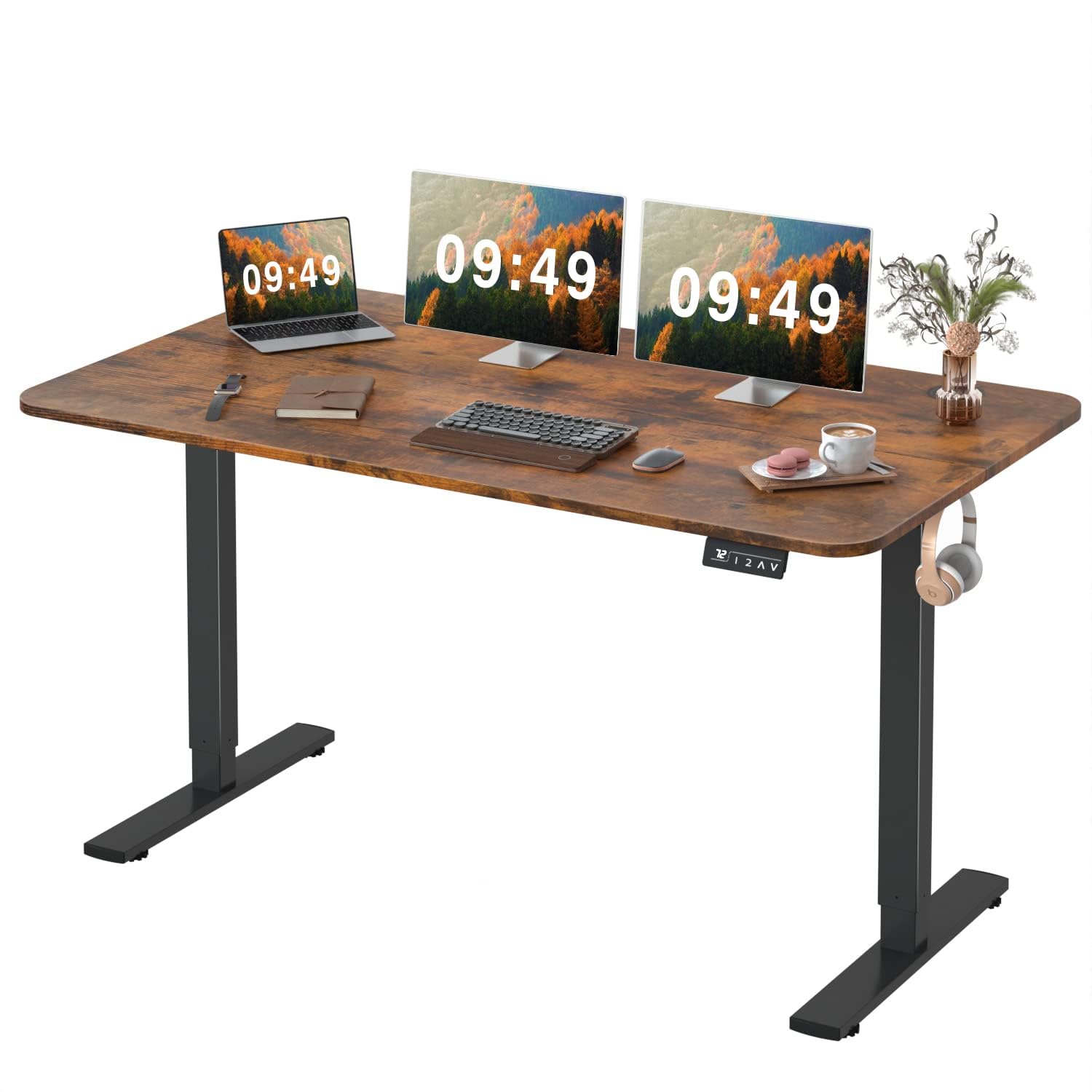
- Furmax Adjustable Standing Desk – Priced at $129.99, this electric height‑adjustable desk offers a spacious 55 × 24‑inch wood surface, memory presets, and a quiet motor rated for over 10,000 cycles. With a 4.4‑star rating from 5,065 reviews, it combines affordability with durability, making it an ideal baseline for ROI calculations.
- VIVO Desk Converter – At $139.99, this dual‑monitor riser provides a 31.5‑inch work surface, 33‑lb lift assist, and minimal assembly. Its 4.6‑star rating from 12,807 reviews highlights reliability, and its ability to transform an existing desk adds flexibility to budget‑constrained deployments.
- Yes4All Wobble Balance Board – For $55.45, this foam balance pad encourages subtle movement, improving circulation and core activation. With a 4.5‑star rating from 610 reviews, it supports the health‑related ROI components by reducing fatigue and promoting active posture.
Comparison and Selection Guide
| Feature | Furmax Adjustable Standing Desk | VIVO Desk Converter | Yes4All Wobble Balance Board |
|---|---|---|---|
| Price | $129.99 | $139.99 | $55.45 |
| Primary Function | Full‑size electric standing desk | Desk‑mounted height converter | Balance/anti‑fatigue mat |
| Height Range | 28.7–46.4 in (1 in/sec) | 4.5–20 in (manual lift) | Fixed thickness |
| Load Capacity | Up to 154 lb | Supports dual monitors up to 33 lb total | Supports user weight up to 250 lb |
| Noise Level | Under 50 dB | Silent mechanical lift | Silent foam |
| Warranty | 2‑year motor warranty | 3‑year manufacturer warranty | 5‑year warranty |
| Average Rating | 4.4/5 (5,065 reviews) | 4.6/5 (12,807 reviews) | 4.5/5 (610 reviews) |
When choosing a solution, consider the existing workspace, budget constraints, and the desired level of customization. Organizations with dedicated office space may benefit from the full‑size Furmax desk, while hot‑desking environments might prefer the portable VIVO converter. The Yes4All balance board is a low‑cost addition that can be paired with any desk to enhance health outcomes.
Best Practices & Tips for Maximizing ROI
- Implement a gradual transition schedule, encouraging employees to alternate between sitting and standing every 30‑45 minutes. This habit reduces fatigue and improves focus, directly influencing productivity metrics.
- Provide training on ergonomic posture, including monitor height, keyboard placement, and proper use of balance accessories. Proper usage minimizes the risk of musculoskeletal injury, preserving the health‑related ROI.
- Track key performance indicators such as absenteeism, self‑reported pain levels, and output quality before and after deployment. Use these data points as inputs for the ROI calculator to demonstrate tangible benefits.
- Leverage the memory presets of the Furmax desk to allow quick height adjustments for multiple users, reducing downtime and enhancing shared‑workspace efficiency.
- Combine the VIVO converter with dual monitors to maintain screen real estate while enabling standing, which can increase task completion speed for visual‑intensive work.
- Encourage the use of the Yes4All balance board during standing periods to promote micro‑movements, which have been shown to improve circulation and reduce lower‑back strain.
- Review warranty and service agreements annually to ensure that maintenance costs remain low and that any malfunctioning components are promptly replaced.
Frequently Asked Questions
What is a realistic productivity increase from using a standing desk?
Most studies report a 2‑5% improvement in task efficiency for employees who alternate between sitting and standing, primarily due to reduced fatigue and increased alertness.
How long does it take to see health‑related cost savings?
Health benefits often become measurable within six months, as reduced back pain and lower absenteeism translate into lower healthcare claims and fewer lost workdays.
Can a desk converter replace a full‑size standing desk?
A desk converter such as the VIVO model provides a cost‑effective solution for environments where space is limited or where employees share workstations. However, it does not offer the same load capacity or surface area as a dedicated standing desk.
Is the noise level of the motor important?
Yes. A motor operating below 50 dB, like the one on the Furmax desk, ensures a quiet workspace, preventing distractions that could negate productivity gains.
Do balance boards interfere with standing desk stability?
When used on a stable surface, the Yes4All balance board adds micro‑movements without compromising desk stability. It is advisable to test the board with the specific desk model to confirm compatibility.
Conclusion
Measuring the ROI of standing desks requires a systematic approach that blends financial analysis with health and productivity metrics. By employing a transparent calculator, selecting durable and ergonomic products, and following best‑practice implementation strategies, organizations can achieve measurable savings and enhanced employee well‑being. The featured products—Furmax Adjustable Standing Desk, VIVO Desk Converter, and Yes4All Wobble Balance Board—provide a comprehensive toolkit to support a successful standing‑desk program.
Products Featured in This Guide
Furmax Adjustable Standing Desk
Price: $129.99 | Rating: 4.4/5 (5,065 reviews)
Featured for its spacious 55 × 24‑inch wood surface, memory presets, and quiet motor—key attributes that drive productivity and health ROI.
VIVO Desk Converter
Price: $139.99 | Rating: 4.6/5 (12,807 reviews)
Featured for its dual‑monitor capacity, 33‑lb lift assist, and minimal assembly, enabling flexible upgrades to existing workstations.
Yes4All Wobble Balance Board
Price: $55.45 | Rating: 4.5/5 (610 reviews)
Featured for its high‑quality closed‑cell foam, non‑slip surface, and therapeutic benefits that support the health component of ROI calculations.