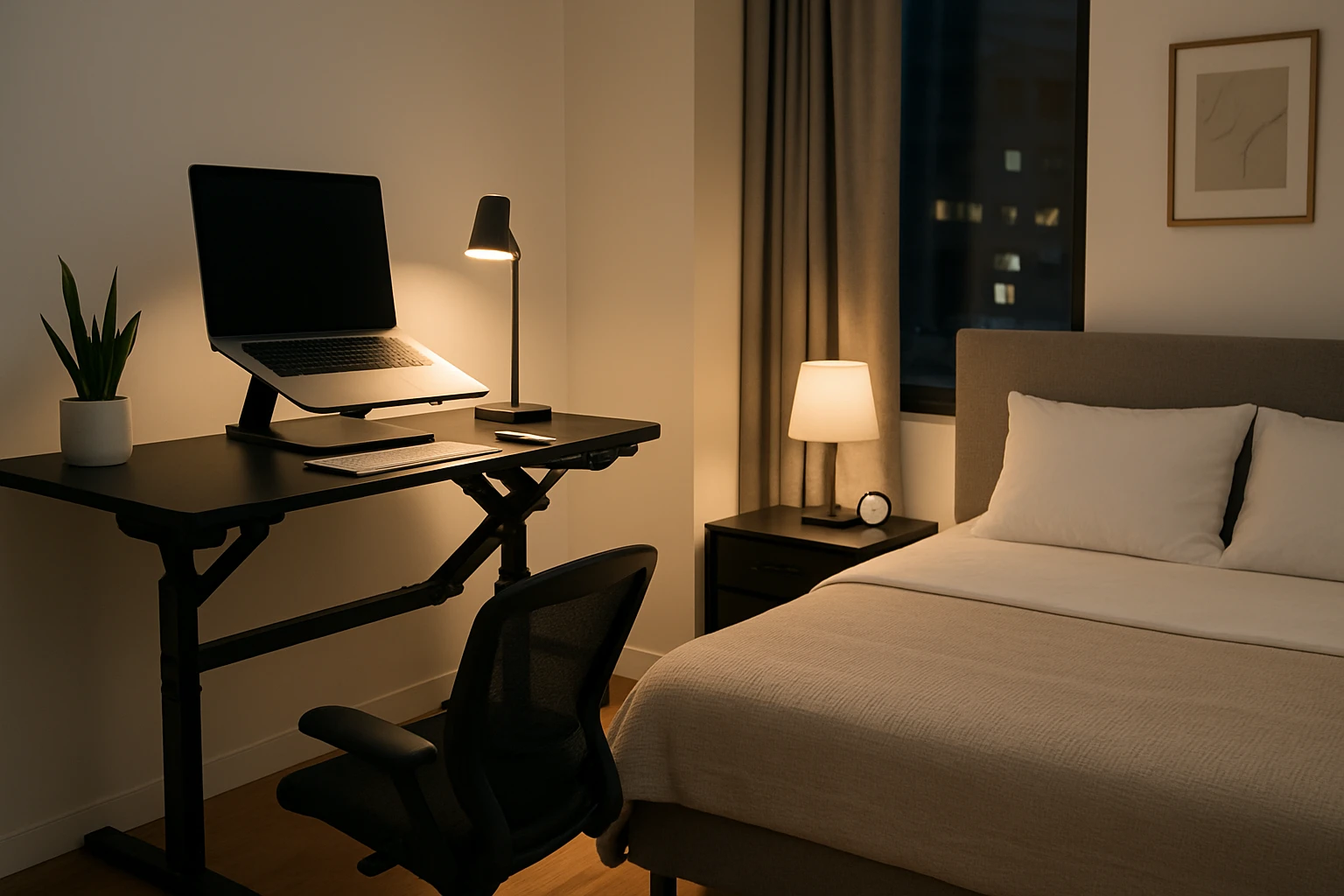

Do Standing Desks Affect Sleep in Studio Apartments? The Ultimate Guide to Layout, Lighting, and Better Rest
Introduction
Living in a studio apartment often requires clever use of limited space, and many residents turn to standing desks to improve ergonomics and productivity. This guide examines the relationship between standing desks and sleep quality, especially in compact living environments. Readers will learn about the physiological effects of standing workstations, optimal layout strategies, lighting techniques that promote circadian health, and practical product recommendations. By the end of the article, one will possess a comprehensive plan for integrating a standing desk without compromising restful sleep.
Background and Context
Research indicates that prolonged sitting can increase musculoskeletal discomfort, reduce circulation, and negatively influence hormonal balance. Conversely, alternating between sitting and standing encourages blood flow, reduces muscle stiffness, and may support the release of melatonin‑friendly hormones in the evening. However, the timing of standing activity, the height of the desk, and the surrounding environment all play a role in determining whether sleep is enhanced or disrupted.
In a studio apartment, the same walls that contain a bedroom also house a workspace, kitchen, and living area. This proximity means that noise, light, and visual clutter from a work zone can spill over into the sleep zone. Understanding how to separate these zones physically and visually is essential for preserving sleep hygiene.
Key concepts that will be explored include circadian rhythm regulation, ergonomic height adjustment, and the impact of ambient lighting temperature on melatonin production. Each concept will be linked to actionable recommendations that respect the constraints of a studio layout.
How Standing Desks Influence Sleep in Small Spaces
Standing desks affect sleep through three primary pathways: physiological activation, environmental lighting, and spatial perception. First, the act of standing stimulates the sympathetic nervous system, increasing alertness. When this activation occurs close to bedtime, it may delay the onset of sleep. Therefore, scheduling standing periods earlier in the day is advisable.
Second, many standing desks incorporate built‑in LED lights or require additional task lighting. Bright, cool‑temperature light (above 5,000 K) suppresses melatonin, while warm light (below 3,000 K) supports its production. Selecting adjustable lighting that can shift to a warmer hue in the evening mitigates this risk.
Third, the visual presence of a large workstation can psychologically signal that the area is still a place of activity. By using visual separators such as curtains, portable screens, or furniture placement, one can reinforce the mental cue that the space is now dedicated to rest.
Optimizing Layout in Studio Apartments
Effective layout begins with defining zones. The sleep zone should be anchored away from direct sightlines to the desk. In many studios, placing the bed against a wall opposite the window creates a natural division, while the desk occupies a corner near a power outlet.
Furniture selection matters. A compact standing desk that sits atop an existing table reduces the need for an additional large piece of furniture. The VIVO 26" Desk Converter exemplifies this approach, offering a 26‑inch surface that fits on most standard desks without consuming floor space.
When the desk is positioned, ensure that the keyboard tray aligns with the user’s elbows at a 90‑degree angle, reducing shoulder strain. The VIVO converter’s adjustable tray rises in sync with the desktop, maintaining ergonomic consistency throughout the height range of 4.5 to 16.9 inches.
Finally, incorporate storage that hides work‑related items after hours. Closed cabinets or decorative baskets can store notebooks, cables, and accessories, preventing visual clutter that might trigger a work mindset before sleep.
Lighting Strategies for Restful Evenings
Lighting design should transition from bright, cool light during work hours to dim, warm light as bedtime approaches. Use a layered lighting system: a primary task lamp for the desk, ambient floor or wall lighting for the room, and a low‑intensity night light near the bed.
Choose bulbs with a color temperature of 2,700 K to 3,000 K after sunset. Smart bulbs that can be programmed to dim automatically at a set time simplify this process. If the standing desk includes built‑in illumination, verify that it offers a warm‑light mode or can be turned off entirely in the evening.
Position the desk lamp so that it does not cast glare onto the computer screen, which can cause eye strain and increase cortisol levels. An adjustable arm lamp with a matte finish diffuser provides even illumination without harsh hotspots.
Consider blackout curtains or blinds to control natural light exposure. Reducing morning light exposure after waking can also help maintain a consistent sleep‑wake cycle, especially when the studio lacks a dedicated bedroom wall.
Integrating the VIVO 26" Desk Converter
The VIVO 26" Desk Converter offers several features that align with the recommendations outlined above. Its 26‑inch surface (25.6" × 15.7") provides ample room for a laptop and a secondary monitor while remaining compact enough for studio desks.
Constructed from a durable steel frame, the converter supports up to 33 lb on the desktop and 4.4 lb on the keyboard tray, ensuring stability for most office setups. The lift‑assist mechanism allows smooth height transitions within a range of 4.5 to 16.9 inches, enabling users to switch between sitting and standing without interrupting workflow.
Assembly is minimal; the unit arrives partially assembled, requiring only the attachment of the keyboard tray. This simplicity reduces the time spent on setup, which is valuable in small apartments where space is at a premium.
With a customer rating of 4.6 out of 5 stars based on 613 reviews, the VIVO converter has demonstrated reliability and user satisfaction. Its design encourages an active work posture while preserving floor space for other essential furniture.
Comparison and Selection Guide
When choosing a standing desk solution for a studio apartment, consider the following criteria:
- Footprint: Measure the available desk surface and select a converter that fits without extending beyond the existing desk dimensions.
- Weight Capacity: Ensure the device can support the combined weight of monitors, laptops, and accessories.
- Adjustment Mechanism: Manual crank, pneumatic lift, or electric motor each have trade‑offs in cost, speed, and noise level.
- Ergonomic Features: Look for a keyboard tray that moves in tandem with the desktop to maintain consistent arm positioning.
- Assembly Complexity: Minimal assembly is preferable for renters who may need to disassemble the unit when moving.
Below is a brief comparison of three common options:
| Option | Footprint | Max Load | Adjustment Type | Price Range |
|---|---|---|---|---|
| VIVO 26" Desk Converter | 25.6" × 15.7" | Desktop 33 lb, Tray 4.4 lb | Touch‑lock lift | Mid‑range |
| Full‑size Electric Standing Desk | 48" × 30" | Up to 200 lb | Electric motor | High |
| Manual Crank Desk Converter | 24" × 14" | Up to 30 lb | Hand crank | Low |
For studio apartments, the VIVO converter provides the optimal balance of size, capacity, and ease of use, making it a strong candidate for those who wish to maintain a tidy living‑work environment.
Best Practices & Tips for Better Rest
- Schedule standing periods earlier in the day and transition to seated work at least two hours before bedtime.
- Use a timer or reminder to prompt height changes, preventing prolonged static posture.
- Dim task lighting to warm tones after sunset and avoid blue‑rich screens; consider a blue‑light filter on monitors.
- Maintain a clear visual separation between the work zone and the sleep zone using curtains, screens, or furniture placement.
- Incorporate a short evening routine that includes gentle stretching or mindfulness to signal the body that sleep is approaching.
- Keep the bedroom temperature between 60‑67 °F (15‑19 °C) and use breathable bedding to support thermoregulation.
- Limit caffeine intake after noon, as heightened alertness from standing activity can be amplified by stimulants.
Frequently Asked Questions
1. Does standing late at night interfere with sleep?
Standing close to bedtime can increase heart rate and cortisol levels, potentially delaying sleep onset. It is advisable to complete standing sessions at least two hours before the intended sleep time.
2. Can a desk converter be used on a small laptop table?
Yes, provided the surface dimensions exceed the converter’s footprint of 25.6" × 15.7". The VIVO converter is designed to sit securely on most standard desks without additional anchoring.
3. How much weight can the VIVO 26" Desk Converter support?
The desktop can hold up to 33 lb, while the integrated keyboard tray supports up to 4.4 lb, sufficient for a laptop, a monitor, and a standard keyboard.
4. Is the lift mechanism noisy?
The touch‑lock lift operates smoothly with minimal audible noise, making it suitable for shared living spaces where quiet is essential.
5. What lighting is best for evening work on a standing desk?
Warm‑white LED lamps (2,700 K–3,000 K) that can be dimmed are ideal. Smart bulbs that transition automatically at sunset further reduce the risk of melatonin suppression.
6. Should I use a separate monitor with the desk converter?
Using a monitor can improve ergonomics by allowing the screen to be positioned at eye level. The VIVO converter’s height range accommodates most monitor sizes without compromising stability.
7. How often should I adjust my standing desk height?
Changing height every 30‑45 minutes encourages movement and prevents static muscle loading. Alternating between sitting and standing throughout the day promotes circulation and reduces fatigue.
Conclusion
Standing desks can positively influence health and productivity when integrated thoughtfully within a studio apartment. By managing the timing of standing activity, employing warm‑tone lighting, and using space‑saving furniture such as the VIVO 26" Desk Converter, residents can maintain ergonomic work habits without sacrificing sleep quality. The strategies outlined in this guide empower individuals to create a harmonious living‑work environment that supports both active days and restful nights.
Products Featured in This Guide
VIVO 26" Desk Converter
Price: See Amazon listing
Rating: 4.6 out of 5 stars (613 reviews)
Why featured: Provides a compact, adjustable standing workspace that fits on existing desks, preserving floor space in studio apartments while offering ergonomic benefits and a smooth lift‑assist mechanism.