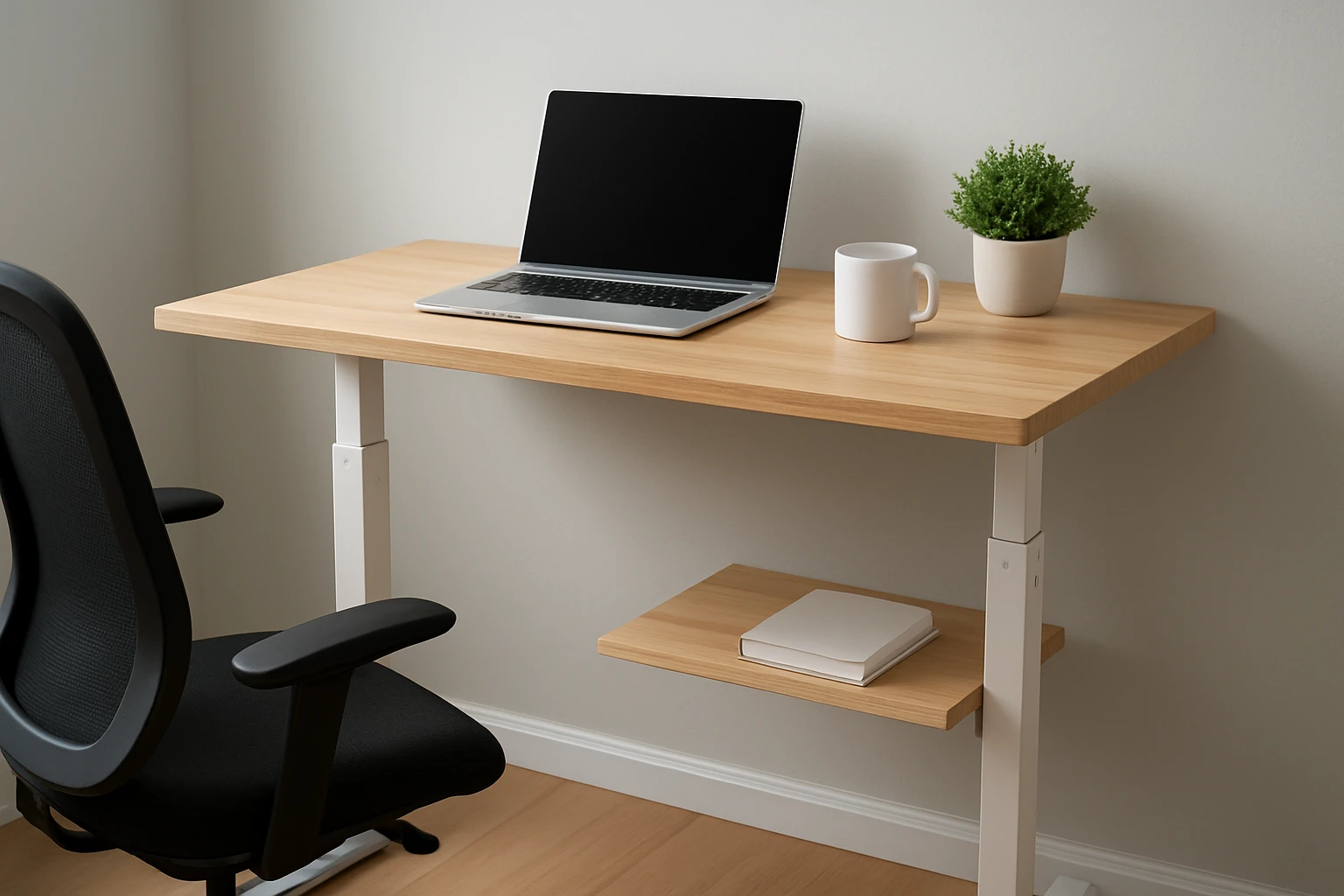
How to Build a DIY Standing Desk for Limited Space: 10 Step‑by‑Step, Space‑Saving Ideas
Introduction
One often discovers that a well‑designed standing desk can improve posture, increase productivity, and free valuable floor area in a small home office. This guide explains how to construct a sturdy, attractive standing desk using limited space while maintaining a professional appearance. The reader will learn how to select appropriate materials, perform precise cuts, apply durable finishes, and assemble a functional workstation that fits into compact environments. By following the ten steps, one can create a custom solution without relying on expensive pre‑made furniture.
What You’ll Need
- Premium wood tabletop – Howizz Acacia Butcher Block Countertop
- Budget‑friendly wood tabletop – SSWOOD Solid Wood Tabletop
- Adjustable metal legs or a height‑adjustable frame (standard 2‑inch steel legs are sufficient)
- Power drill with appropriate bits
- Measuring tape, carpenter’s square, and pencil
- Sandpaper (120‑ and 220‑grit) or an orbital sander
- Finishing oil or polyurethane
- Self‑tapping screws (included with many desk frames)
- Cable management clips or a simple grommet
Step 1 – Determine the Available Footprint
Before purchasing any material, one should measure the maximum width and depth that the desk can occupy. Use a measuring tape to record the distance from the wall to the opposite edge of the work area, and note any obstacles such as windows or heating vents. Subtract at least two inches from each side to allow for comfortable movement and to avoid contact with surrounding furniture. This measured rectangle will serve as the design envelope for the tabletop.
Step 2 – Choose the Appropriate Tabletop
The tabletop forms the visual and structural core of the standing desk. For a premium, natural‑look surface, the Howizz Acacia Butcher Block Countertop offers a 1.5‑inch thick, sustainably sourced acacia board with a chevron grain that adds elegance to any room. Its 48 × 25 inch dimensions provide ample workspace while the thickness ensures rigidity without additional bracing. The product carries a rating of 4.6 out of 5 from 188 reviews, indicating high customer satisfaction.
If budget constraints are a concern, the SSWOOD Solid Wood Tabletop presents a 1‑inch thick OSB‑based board that can support up to 400 lb. At a price of $89.99 and a rating of 4.6 from 37 reviews, it delivers reliable performance for a modest cost. Both options arrive pre‑sanded, allowing one to apply a finish of choice.
Step 3 – Mark and Cut to Exact Dimensions
Using the measurements obtained in Step 1, one should mark the desired outline on the selected tabletop with a pencil and a straight edge. For the Howizz countertop, it may be necessary to trim a few inches if the space is narrower than the 48‑inch width; the product can be cut with a circular saw equipped with a fine‑toothed blade to avoid splintering. The SSWOOD board can be cut similarly, but its 1‑inch thickness makes it easier to handle for novice woodworkers. Always wear safety goggles and follow the manufacturer’s recommendations for blade speed.
After cutting, inspect the edges for roughness. Use a block plane or a sanding block to smooth any uneven sections before proceeding to the finishing stage.
Step 4 – Sand and Apply a Protective Finish
Both tabletops arrive pre‑sanded, yet a second sanding pass with 220‑grit paper will enhance the surface for finishing. Sand in the direction of the wood grain to prevent scratches. For the acacia butcher block, a tung oil finish is recommended because it penetrates the dense fibers and highlights the natural grain while providing water resistance. Apply the oil with a clean lint‑free cloth, allow twelve hours to dry between coats, and repeat for two coats.
The SSWOOD OSB surface benefits from a water‑based polyurethane, which creates a hard, clear film that protects against spills and wear. Apply the polyurethane with a foam brush, following the manufacturer’s drying times. Proper finishing extends the lifespan of the desk and maintains an attractive appearance.
Step 5 – Select and Prepare the Adjustable Legs
Adjustable steel legs are essential for a standing desk, as they permit height changes throughout the day. Choose legs with a load rating exceeding the combined weight of the tabletop and equipment, typically at least 150 lb. Many commercial leg kits include pre‑drilled holes that align with a 2‑inch tabletop; however, the Howizz and SSWOOD boards are not pre‑drilled, so one must mark the mounting locations carefully. Use a carpenter’s square to ensure the holes are positioned symmetrically on each side, typically 2‑3 inches from the edge.
Drill pilot holes using a drill bit slightly smaller than the screw diameter to prevent splitting the wood. For the 1.5‑inch thick Howizz board, a ¼‑inch drill bit works well; for the 1‑inch SSWOOD board, a ⅜‑inch bit provides sufficient clearance for the self‑tapping screws supplied with many leg kits.
Step 6 – Assemble the Desk Frame
Place the tabletop upside down on a clean, padded surface to protect the finish. Align the pre‑drilled holes with the leg brackets, insert the self‑tapping screws, and tighten them with a screwdriver or drill set to low torque. It is advisable to tighten the screws in a criss‑cross pattern to distribute the load evenly and avoid warping. Verify that the legs are vertical by checking with a level; adjust any uneven legs before fully tightening.
For added stability, one may attach a cross‑brace between the legs using wood dowels or metal brackets. This reinforcement is particularly useful for the thinner SSWOOD board, which may experience slight flex under heavy equipment.
Step 7 – Install the Height‑Adjustment Mechanism
If the chosen leg kit includes a pneumatic or electric lift system, follow the manufacturer’s instructions to connect the power source and calibrate the height range. Ensure that the mechanism can support the weight of the tabletop plus monitors, keyboard, and accessories. Test the raise and lower functions several times to confirm smooth operation and to detect any binding or noise.
When using manual crank legs, one should verify that the crank handle is positioned comfortably within reach and that the turning motion does not interfere with the workspace.
Step 8 – Organize Cables and Accessories
Effective cable management preserves the clean aesthetic of the standing desk and reduces tripping hazards. Drill a small hole near the back edge of the tabletop, insert a rubber grommet, and route power and data cables through it. Attach cable clips to the underside of the desk to keep cords bundled. If additional storage is required, consider mounting a small pegboard or a set of magnetic strips to the side of the desk.
Step 9 – Test Stability and Adjust Height Settings
Before placing equipment on the desk, one should apply a moderate load—such as a stack of books—to evaluate stability. Gently press on each corner to ensure there is no wobble. If movement is detected, tighten the leg screws further or add a diagonal brace. Adjust the height to the user’s preferred standing and sitting positions, typically ranging from 38 inches (sitting) to 48 inches (standing) for most adults.
Step 10 – Personalize the Workspace
Finally, one can add personal touches that enhance ergonomics and visual appeal. A monitor arm reduces neck strain, while a wrist‑rest pad protects the forearms during long typing sessions. Consider adding a thin anti‑fatigue mat on the floor to improve comfort while standing. These accessories do not alter the core structure of the desk but contribute to a healthier work environment.
Tips & Pro Tips
- Apply finish in a well‑ventilated area and allow each coat to cure fully before handling the tabletop.
- When cutting the Howizz countertop, use a guide rail to maintain a straight cut and reduce material waste.
- For the SSWOOD board, seal all edges with a thin line of polyurethane to prevent moisture ingress.
- Periodically check the leg screws for loosening, especially after the first few weeks of use.
- Use a digital inclinometer to set the exact height for sitting and standing positions, ensuring consistent ergonomics.
Troubleshooting
Problem: The desk wobbles after assembly.
Solution: Verify that all leg screws are tightened evenly and that the floor is level. If the floor is uneven, place shims under the lower leg until the desk sits level.
Problem: The finish appears blotchy.
Solution: Lightly sand the affected area with 220‑grit paper, remove dust, and reapply a thin coat of oil or polyurethane. Ensure the wood surface is clean before each coat.
Conclusion
One now possesses a clear, ten‑step process for constructing a compact standing desk that maximizes limited space while delivering durability and aesthetic quality. By selecting a suitable tabletop—such as the premium Howizz Acacia Butcher Block Countertop or the economical SSWOOD Solid Wood Tabletop—applying proper finishes, and assembling a reliable adjustable frame, one creates a workspace that supports health and productivity. The guide encourages readers to apply these methods, adapt the dimensions to their own rooms, and enjoy a personalized standing desk for years to come.
Products Mentioned in This Guide
Frequently Asked Questions
What are the best wood options for a DIY standing desk in a small space?
Premium acacia butcher block offers durability and a sleek look, while budget-friendly solid wood like SSWOOD provides a lightweight, cost-effective alternative.
How can I maximize floor space with a standing desk?
Choose a compact tabletop size, use wall‑mounted or fold‑away legs, and keep the desk height adjustable to fit under existing furniture.
Do I need special tools to build a standing desk?
A power drill with appropriate bits, a saw for precise cuts, and basic hand tools (screwdriver, sandpaper) are sufficient for most builds.
Can I use standard 2‑inch steel legs for height adjustment?
Yes, standard 2‑inch steel legs work well and can be paired with a simple crank or pneumatic mechanism for easy height changes.
What finish should I apply to protect the tabletop?
Apply a food‑grade mineral oil or polyurethane sealant to protect the wood from moisture and wear while enhancing its natural grain.