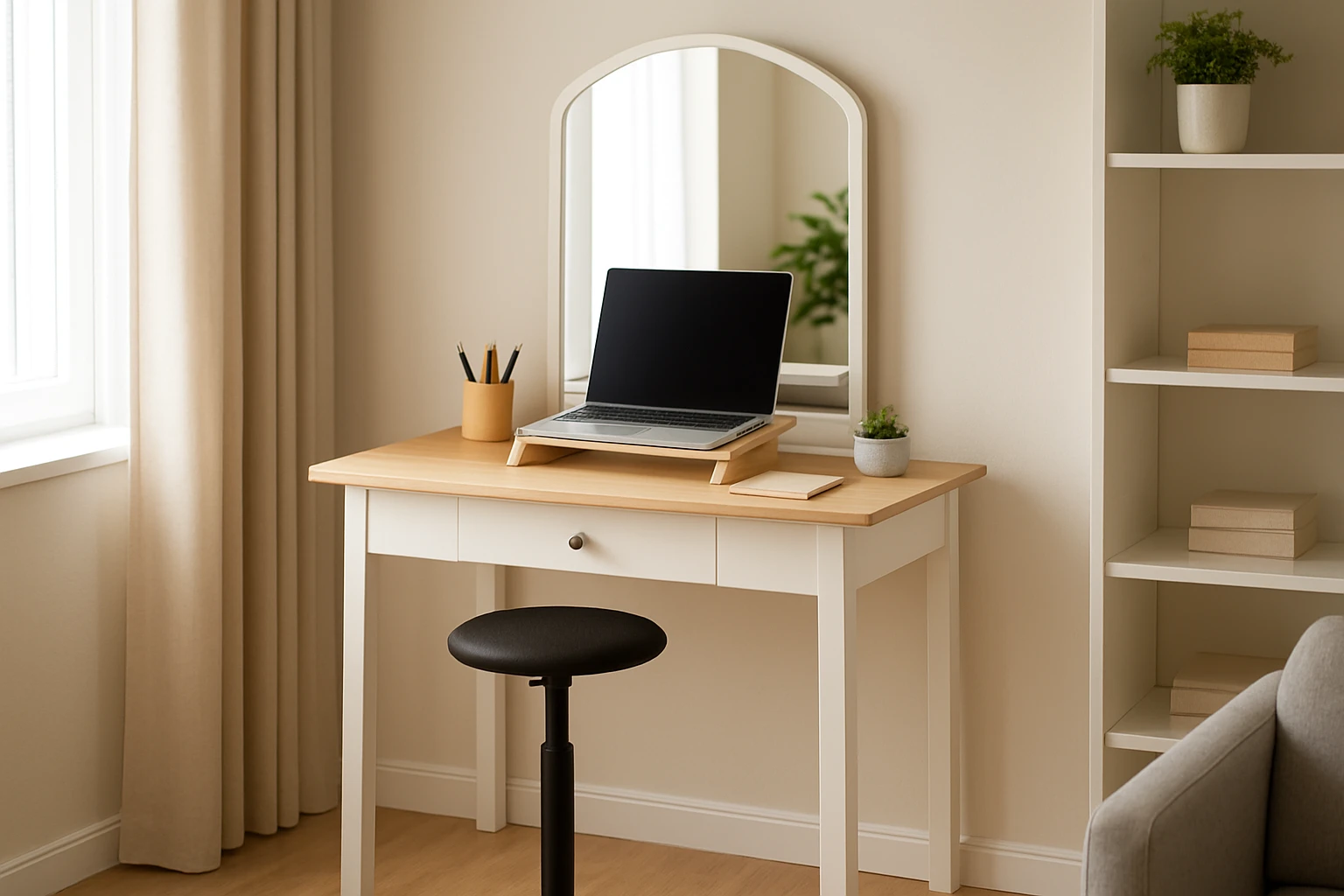
Introduction
One often overlooked piece of furniture in a small apartment is the vanity. By converting it into a standing desk, one can reclaim valuable floor space while creating an ergonomic workstation. This guide explains the entire process, from assessing the vanity to final adjustments, and highlights tools that simplify each stage. Readers will gain confidence to execute a professional‑looking transformation without extensive carpentry experience.
What You'll Need
- Measuring tape and level
- Power drill with assorted bits
- Heavy‑duty brackets or L‑shaped metal supports
- Sandpaper (120‑grit) and wood filler
- Paint or finish to match existing décor
- Blue Dual Monitor Stand Riser – provides elevated monitor height and integrated storage
Step 1: Assess the Vanity Structure
First, examine the vanity for load‑bearing capacity. One should verify that the top surface is solid wood or reinforced particleboard capable of supporting a monitor, keyboard, and occasional weight. Use a level to confirm the surface is even; unevenness can cause wobble once the desk is raised. If the vanity shows signs of weakness, reinforce it with metal brackets before proceeding.
Step 2: Reinforce and Modify the Frame
Attach heavy‑duty L‑shaped brackets to the interior corners of the vanity using a power drill. These brackets distribute weight evenly and prevent sagging when the standing height is reached. Apply wood filler to any visible cracks and sand the surface smooth, creating a uniform base for paint or veneer. This reinforcement step ensures longevity, especially when the desk is used for several hours daily.
Step 3: Install the Monitor Stand Riser
Place the Blue Dual Monitor Stand Riser on the vanity surface. The riser elevates monitors to eye level, reducing neck strain and improving posture—critical benefits for a standing workstation. Its built‑in drawer and magnetic pen holders free up desk space for stationery, while the sturdy metal construction (rated 4.6/5 from 2,534 reviews) supports up to 30 lb per monitor. Position the riser centrally, then secure it with non‑slip silicone pads to prevent movement during height adjustments.
Step 4: Cable Management and Accessory Placement
Run power and data cables through the drawer’s interior compartment, keeping them out of sight and reducing clutter. The magnetic pen holders can also store small cable ties, making future re‑arrangements effortless. If additional USB ports are required, a compact hub can be placed within the drawer, maintaining a clean aesthetic. Ensure all cables have enough slack to accommodate the standing height without tension.
Step 5: Finish, Test, and Adjust
Apply a fresh coat of paint or a protective finish that matches the existing vanity color scheme. Once dry, test the standing height by alternating between sitting and standing positions, confirming that the monitor height remains at eye level. Adjust the monitor tilt if necessary, using the riser’s built‑in tilt mechanism. Finally, organize work tools in the drawer and pen holders, completing a functional and tidy standing desk.
Tips & Pro Tips
- Use a rubber mat underneath the vanity to reduce floor vibration and protect flooring.
- Consider adding a small anti‑fatigue mat on the floor for added comfort during prolonged standing.
- If the vanity has a built‑in mirror, cover it with a matte film to reduce glare on the monitor.
- Periodically tighten bracket screws to maintain structural integrity.
Troubleshooting
- Wobbling desk: Re‑check bracket placement and add additional L‑brackets if necessary.
- Monitor too low: Verify the riser is placed on a level surface; use shims to correct minor unevenness.
- Cable strain: Reroute cables through the drawer’s interior and use cable clips to secure excess length.
Conclusion
By following these five steps, one can transform a modest vanity into a versatile standing desk that maximizes limited apartment space. The process combines basic carpentry, strategic reinforcement, and the smart use of the Blue Dual Monitor Stand Riser for ergonomic benefits. Readers are encouraged to personalize finishes and accessories to reflect their style while enjoying improved posture and productivity.
Products Mentioned in This Guide
Frequently Asked Questions
Can any vanity be turned into a standing desk?
Only vanities with a solid wood top or reinforced particleboard that can bear the weight of a monitor and keyboard are suitable.
What tools are essential for the conversion?
You’ll need a measuring tape, level, power drill with bits, heavy‑duty brackets or L‑shaped supports, sandpaper, wood filler, and paint or finish.
How do I determine the correct desk height?
Measure the ergonomic standing height (typically 40‑42 inches) and use brackets or a monitor riser to raise the vanity surface to that level.
Will the converted desk be stable enough for daily use?
Using sturdy metal brackets and securing them to the vanity’s frame ensures stability and prevents wobble during regular work.
Do I need to refinish the vanity after modification?
Yes, sand the surface, apply wood filler where needed, and paint or finish to match your décor for a professional look.