Introduction
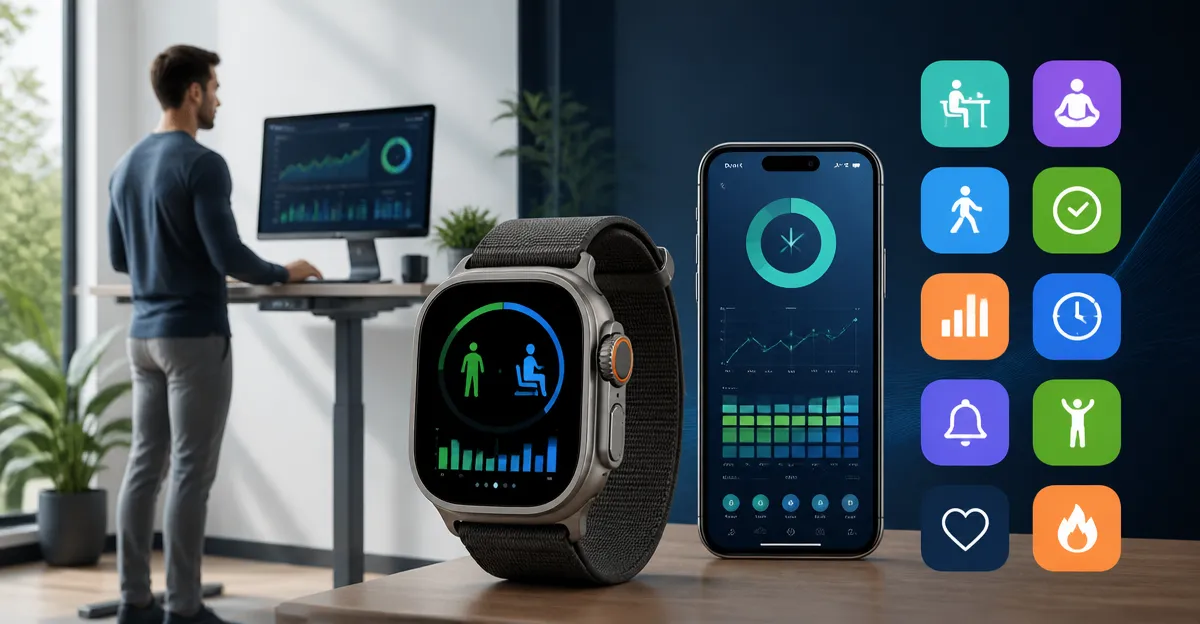
In a world where sedentary work environments dominate, maintaining an active posture has become essential for health, energy, and productivity. Modern professionals are turning to sit‑stand habit tracker apps to remind them to move, stretch, and reset their posture throughout the day, thereby reducing fatigue and improving focus.
These applications are most effective when paired with wearable technology that can monitor heart rate, activity level, and even detect falls. By integrating data from devices such as the Apple Watch Ultra 3, the QVEQ Fitness Tracker Smartwatch, and the Garmin Instinct E, users gain real‑time feedback that transforms a simple reminder into a comprehensive health strategy.
This listicle presents the ten most effective sit‑stand habit tracker apps for 2026, explaining why each category matters and how the featured wearables enhance the overall experience.
1. AI‑Powered Posture Coaches
Artificial‑intelligence posture coaches analyze motion patterns and provide personalized suggestions to improve alignment. They are especially valuable for desk workers who spend long hours in front of a screen.
The Apple Watch Ultra 3 excels in this category with its advanced sensor suite, including dual‑frequency GPS and a sapphire crystal display that remains readable in bright office lighting. Priced at $732.26, it boasts a 4.8‑star rating from 995 reviews, with users praising its precise fall detection and satellite emergency messaging.
When paired with an AI coach app, the Ultra 3 can deliver haptic alerts the moment the user slouches, encouraging an immediate stand‑up or stretch. This seamless integration turns data into actionable habit changes.
2. Integrated Health Dashboards
Some apps consolidate heart rate, blood oxygen, and sleep data into a single dashboard, offering a holistic view of wellbeing. This approach helps users understand how posture influences overall health.
The QVEQ Fitness Tracker Smartwatch provides continuous 24/7 heart rate and SpO2 monitoring at an affordable $79.99, earning a 4.6‑star rating from 73 reviewers. Customers frequently note the device’s accurate sleep analysis and helpful hydration reminders.
By linking the QVEQ smartwatch to a health‑dashboard app, users can see how frequent standing impacts their heart rate variability and oxygen saturation, reinforcing the habit with measurable outcomes.
3. Gamified Movement Challenges
Gamification motivates users through points, leaderboards, and achievement badges, turning posture improvement into a fun competition.
The rugged Garmin Instinct E supports this model with its multi‑GNSS navigation and up to 16 days of battery life, priced at $199.99 and rated 4.6 stars by 269 reviewers. Its built‑in compass and barometric altimeter add an adventurous flair to daily movement goals.
When a gamified app awards badges for every 30‑minute standing interval, the Instinct E can vibrate to signal success, encouraging users to maintain momentum throughout the workday.
4. Calendar‑Integrated Reminders
Apps that sync with personal calendars ensure sit‑stand prompts align with meetings, deadlines, and breaks, reducing the likelihood of missed alerts.
Both the Apple Watch Ultra 3 and QVEQ smartwatch support seamless calendar integration via their companion apps. The Ultra 3’s cellular capability, priced at $732.26, allows users to receive prompts even when their phone is out of reach, while the QVEQ’s IP68 waterproof rating ensures reliability during outdoor activities.
By embedding reminders directly into a user’s schedule, these devices help maintain a consistent standing rhythm without disrupting workflow.
5. Focus‑Enhancing Pomodoro Timers
Combining sit‑stand cues with Pomodoro work intervals can boost concentration while preventing fatigue.
The Apple Watch Ultra 3’s customizable action button lets users start a Pomodoro timer with a single press, then receive a gentle vibration to stand after each 25‑minute session. Reviewers highlight the button’s ease of use for quick workout starts and flashlight activation.
Similarly, the Garmin Instinct E offers a low‑power mode that extends battery life during long focus sessions, ensuring the timer remains active for weeks without recharging.
6. Environmental Awareness Features
Some sit‑stand apps incorporate ambient data such as temperature, humidity, and air quality, prompting users to adjust posture in response to environmental stressors.
The QVEQ smartwatch includes real‑time weather updates and a built‑in pedometer, allowing users to correlate standing frequency with external conditions. Its 1.47‑inch TFT display presents clear icons even under direct sunlight.
When the app detects high humidity, it can suggest a brief standing stretch to improve circulation, leveraging the smartwatch’s sensor data for a more responsive habit loop.
7. Collaborative Team Challenges
Corporate wellness programs increasingly use team‑based challenges to foster collective accountability.
With its robust cellular connectivity, the Apple Watch Ultra 3 enables employees to share standing metrics in real time, even when traveling. The device’s 42‑hour normal‑use battery life ensures continuous data transmission throughout a typical workweek.
Teams using a collaborative app can view leaderboards on the Ultra 3’s display, encouraging friendly competition and reinforcing a culture of movement.
8. Adaptive Break Scheduling
Advanced apps analyze work patterns to suggest optimal break times, adapting to individual productivity rhythms.
The Garmin Instinct E’s 10 ATM water rating and MIL‑STD‑810 durability make it suitable for both office and field environments, allowing users to receive adaptive break alerts regardless of setting.
Its long battery life—up to 16 days—means the device can continuously learn from user behavior without frequent recharging, delivering increasingly accurate break recommendations.
9. Voice‑Activated Controls
Voice assistants simplify interaction with sit‑stand apps, especially when hands are occupied.
The Apple Watch Ultra 3 supports Siri integration, enabling users to say, “Hey Siri, start a stand timer,” without touching the device. This hands‑free capability is praised in reviews for its convenience during workouts or meetings.
The QVEQ smartwatch also offers voice alerts, allowing users to receive spoken reminders that complement haptic cues, thereby catering to diverse sensory preferences.
10. Data Export and Insight Reports
Exportable data empowers users to conduct deeper analyses, track trends, and share results with healthcare professionals.
All three wearables provide CSV export options through their respective companion apps. The Apple Watch Ultra 3’s Vitals app generates comprehensive health reports, while the Garmin Instinct E’s Connect IQ Store offers custom data visualizations.
Access to detailed reports enables users to correlate standing frequency with sleep quality, heart rate variability, and overall productivity, reinforcing long‑term habit formation.
Comparison of Featured Wearables
| Device | Price | Battery Life | Key Sensors | Rating |
|---|---|---|---|---|
| Apple Watch Ultra 3 | $732.26 | 42 hrs (normal) / 72 hrs (Low Power) | Dual‑frequency GPS, Blood‑oxygen, ECG, Sapphire display | 4.8/5 (995 reviews) |
| QVEQ Fitness Tracker Smartwatch | $79.99 | Up to 7 days typical use | Heart‑rate, SpO2, 1.47" TFT display, IP68 | 4.6/5 (73 reviews) |
| Garmin Instinct E | $199.99 | Up to 16 days | Heart‑rate, Pulse Ox, 3‑axis compass, barometric altimeter | 4.6/5 (269 reviews) |
Conclusion
Effective sit‑stand habit tracking hinges on the synergy between intelligent software and reliable hardware. The ten apps highlighted in this article each address a distinct aspect of posture management, from AI coaching to collaborative challenges.
When paired with a capable wearable—whether the premium Apple Watch Ultra 3, the budget‑friendly QVEQ Smartwatch, or the rugged Garmin Instinct E—these apps transform simple reminders into measurable health improvements, boosting energy, focus, and overall productivity.
Readers are encouraged to evaluate their specific work environment, budget, and feature preferences before selecting the optimal combination of app and device.
Frequently Asked Questions
What are the main benefits of using a sit‑stand habit tracker app?
It reminds you to change posture regularly, reducing fatigue, improving circulation, and boosting focus throughout the workday.
Do I need a wearable device to use sit‑stand tracker apps effectively?
While not required, wearables like Apple Watch Ultra 3 or Garmin Instinct E provide real‑time activity data that enhances reminders and health insights.
Can these apps integrate with multiple wearables at once?
Yes, most top apps sync with various Bluetooth wearables, consolidating heart‑rate, steps, and posture data into a single dashboard.
How do sit‑stand apps help prevent long‑term health issues?
By prompting regular movement, they lower the risk of musculoskeletal strain, cardiovascular problems, and metabolic disorders linked to prolonged sitting.
Are there any privacy concerns when linking health data from wearables to these apps?
Reputable apps use end‑to‑end encryption and allow you to control data sharing, but always review the privacy policy before granting access.