Introduction
This guide explains how one can thoroughly disinfect a used standing desk in order to remove allergens and microbial contaminants. One will learn why proper sanitation is essential for indoor air quality, especially in shared work environments. The instructions are designed for individuals who have moderate experience with cleaning but require a systematic approach. By following each step, one will achieve a desk surface that is both safe for frequent contact and pleasant for occupants.
What You’ll Need
- Seventh Generation Disinfectant Spray – 13.9 oz, pack of 4, $36.31, 4.5/5 rating (3,831 reviews)
- Microfiber cleaning cloths – preferably lint‑free and washable.
- Soft‑bristled brush – for crevices and adjustable joints.
- Vacuum cleaner with HEPA filter – to capture fine dust particles.
- Protective gloves – to avoid skin irritation from cleaning agents.
Step 1: Clear the Desk and Remove Loose Debris
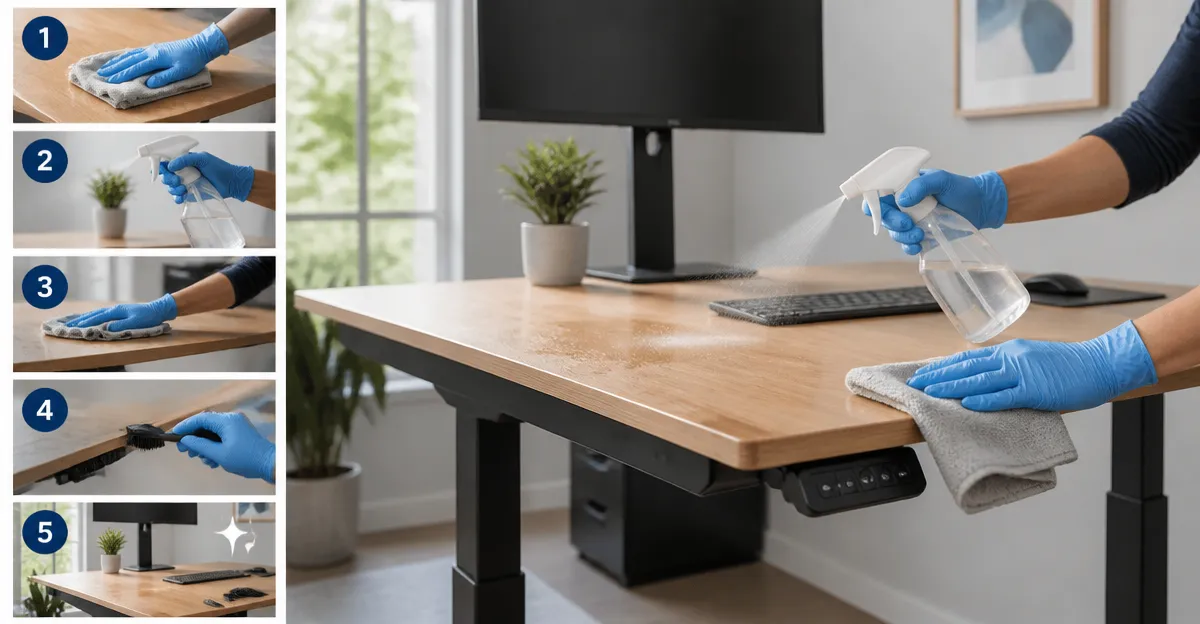
Begin by removing all accessories, monitors, keyboard trays, and cable organizers from the desk surface. Use a vacuum equipped with a HEPA filter to extract dust, pollen, and pet dander that may have settled in the frame and under the tabletop. For hard‑to‑reach areas, employ a soft‑bristled brush to dislodge particles from hinges and adjustable columns. This initial removal reduces the load on the disinfectant and prevents the formation of streaks during later stages.
Step 2: Pre‑Clean with a Mild Detergent Solution
Prepare a solution of warm water and a few drops of a gentle, pH‑balanced detergent. Dampen a microfiber cloth with the solution and wipe the entire desk, paying special attention to textured surfaces where allergens can embed. Rinse the cloth frequently to avoid redistributing grime. Allow the surface to air‑dry for three to five minutes; this ensures that the subsequent disinfectant will contact a relatively clean substrate, maximizing its efficacy.
Step 3: Apply the Botanical Disinfectant
Using the Seventh Generation Disinfectant Spray, mist the entire tabletop and all exposed frame components. The product kills 99.99 % of bacteria and viruses, including influenza A, H1N1, and common allergens such as Staphylococcus aureus. Its active ingredient, thymol, is derived from thyme oil and provides a botanical alternative to harsh chemicals, making it safe for children, pets, and food‑contact surfaces. Because the spray does not require rinsing, one can proceed directly to the next step without waiting for a water‑free drying period.
Step 4: Allow Sufficient Contact Time
Leave the disinfectant on the surface for at least five minutes. During this interval, thymol penetrates microbial cell walls, disrupting their metabolic processes. The eucalyptus, spearmint, and thyme scent also neutralizes lingering odors caused by odor‑producing bacteria, creating a fresh working environment. Resist the temptation to wipe the spray away; the product is formulated to remain active until it naturally evaporates.
Step 5: Wipe Down with a Clean Microfiber Cloth
After the contact time has elapsed, use a fresh, dry microfiber cloth to gently polish the desk. This step removes any residual residue while preserving the natural shine of the laminate or wood finish. The cloth also captures any remaining particles that may have been loosened by the disinfectant. If a faint film is observed, repeat the spraying process on the affected area only.
Step 6: Reassemble and Perform a Final Inspection
Replace all accessories, ensuring that cables are neatly routed and that the desk height is correctly adjusted. Conduct a visual inspection to verify that no streaks, droplets, or missed spots remain. Run a hand over the surface; the mild vanilla‑herbal fragrance should be noticeable, indicating that the botanical disinfectant has performed as intended. Finally, document the cleaning date for future reference, especially in shared office settings.
Tips & Pro Tips
- Perform the disinfection routine during a low‑traffic period to allow the desk to dry without interruption.
- For desks with fabric padding or upholstered accessories, use a spray‑only method and avoid saturating the material.
- Combine the disinfectant with a portable air purifier that contains a HEPA filter to reduce airborne allergens while cleaning.
- Store the disinfectant spray in a cool, dark place to preserve the potency of the essential‑oil ingredients.
Troubleshooting
Problem: Visible streaks after wiping.
Solution: Use a second dry microfiber cloth and apply gentle pressure in a circular motion. If streaks persist, dilute the spray with a small amount of distilled water and repeat.
Problem: Unpleasant odor remains.
Solution: Ensure that the area is well‑ventilated; open windows or use a fan to accelerate evaporation of the botanical fragrance.
Conclusion
By following this systematic approach, one can effectively disinfect a used standing desk, eradicate allergens, and maintain a hygienic workspace. The combination of a thorough pre‑clean, a botanical disinfectant, and proper drying time yields a surface that is safe for daily interaction. Regular implementation of this routine will contribute to improved indoor air quality and reduced risk of illness among occupants. One is encouraged to adopt these practices as part of an ongoing office‑maintenance program.
Products Mentioned in This Guide
Seventh Generation Disinfectant Spray
Price: $36.31
Rating: 4.5/5.0 (3,831 reviews)
- Kills 99.99 % of bacteria and viruses
- No‑rinse formula safe for food‑contact surfaces
- Botanical active ingredient thymol from thyme oil
- Fresh eucalyptus, spearmint, and thyme scent
Frequently Asked Questions
Why is it important to disinfect a used standing desk for allergens?
Disinfecting removes dust mites, pollen, and microbial contaminants that can degrade indoor air quality and trigger allergies.
What type of disinfectant is recommended for a standing desk?
A non‑toxic, EPA‑approved spray such as Seventh Generation Disinfectant Spray works well on wood, metal, and laminate surfaces.
How do I clean crevices and adjustable joints on the desk?
Use a soft‑bristled brush to loosen debris, then wipe with a microfiber cloth dampened with disinfectant.
Do I need a HEPA vacuum before wiping the desk?
Yes, vacuuming first captures fine dust particles that could spread when the surface is sprayed.
Can I reuse the cleaning cloths after disinfecting a desk?
Yes, wash lint‑free microfiber cloths in hot water and dry them before the next use to maintain effectiveness.