How to Secure a Standing Desk on a Balcony: Step‑by‑Step Guide to Anchoring, Stability & Safety
Introduction
This guide explains how to transform a balcony into a functional workspace by securely anchoring a standing desk. Readers will learn how to evaluate load capacity, select appropriate anchoring hardware, protect the balcony surface, and maintain long‑term stability. The information is valuable because an improperly secured desk can damage the balcony, create safety hazards, or cause the desk to wobble, reducing the ergonomic benefits of sit‑to‑stand work. By following the procedures outlined below, one can enjoy the fresh air and natural light of an outdoor office while preserving the structural integrity of the balcony.
What You'll Need
- Measuring tape and level
- Heavy‑duty anchor bolts (minimum 1/2" diameter, stainless steel)
- Power drill with masonry bit
- Adjustable wrenches or socket set
- Rubber floor protectors or anti‑slip mats
- Weather‑proof sealant (silicone based)
- One of the recommended standing desks (first mention linked)
1. Assess Balcony Load Capacity
Before installing any furniture, verify that the balcony floor can support the combined weight of the desk, equipment, and user. Most residential balconies are designed for a live load of 40–60 pounds per square foot. Locate the building’s structural specifications or consult a qualified engineer if the documentation is unavailable. Use a measuring tape to determine the exact square footage where the desk will sit, then multiply by the recommended load rating. For example, a 4×4‑foot area with a 50‑pound per square foot rating can safely hold up to 800 pounds. Compare this figure with the maximum load capacity of the chosen desk, which is typically listed in the product specifications.
2. Choose a Suitable Desk
Selecting a desk that matches the balcony's dimensions and load limits is essential. The following options are proven to perform well in outdoor or semi‑outdoor environments when properly anchored:
- Cubiker Standing Desk – Price: $79.99, Rating: 4.6/5 (4,381 reviews). Features a sturdy steel frame, 176 lb capacity, and a quiet electric motor. Its compact 48×24‑inch surface fits most balconies while providing ample workspace.
- ErGear Standing Desk – Price: $119.99, Rating: 4.5/5 (11,946 reviews). Offers four memory presets, an aerospace‑grade frame, and a larger footprint for dual‑monitor setups.
- FEZIBO Standing Desk – Price: $112.99, Rating: 4.5/5 (4,814 reviews). Includes reinforced steel, FSC‑certified wood, and three memory presets.
- Claiks Electric Standing Desk – Price: $109.99, Rating: 4.4/5 (5,453 reviews). Provides three preset heights and a rustic brown finish that blends with outdoor décor.
- HUANUO Standing Desk – Price: $89.99, Rating: 4.4/5 (2,469 reviews). Compact 32×19‑inch model ideal for limited balcony space, with four memory presets.
When deciding, compare the desk's weight, dimensions, and load capacity with the balcony's specifications. The Cubiker model is the most budget‑friendly while still offering a robust steel frame, making it a reliable choice for most users.
3. Prepare the Balcony Surface
Protect the balcony flooring from scratches, moisture, and UV exposure. Lay down rubber floor protectors or anti‑slip mats in the area where the desk will sit. These mats distribute weight evenly and reduce the risk of the desk slipping on a smooth surface. Apply a thin bead of weather‑proof silicone sealant along the edges of the mat where it meets the balcony rail to prevent water infiltration. Allow the sealant to cure for at least 24 hours before proceeding.
4. Mark Anchor Points and Drill Holes
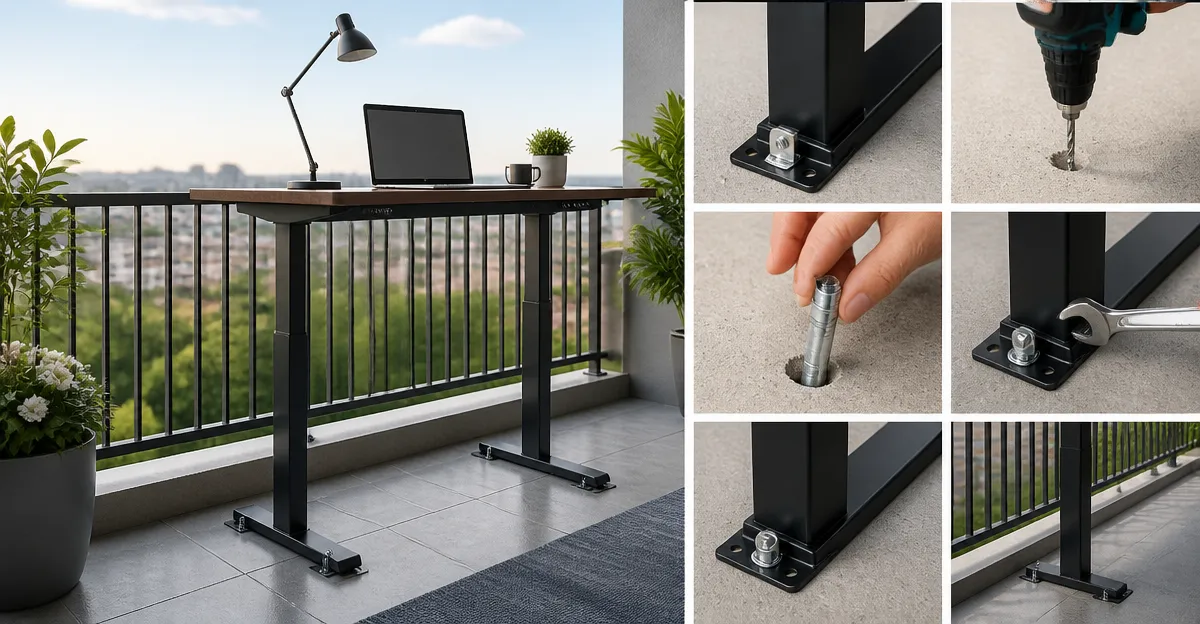
Using a level, position the desk where it will provide optimal ergonomics and view. Mark the four corners of the desk base on the balcony floor. For each corner, locate a solid structural element such as a concrete slab or a metal railing that can accept an anchor bolt. Place a pencil mark directly over each structural element. Fit a masonry drill bit that matches the diameter of the anchor bolts (typically 1/2"). Drill slowly to avoid cracking the concrete, and clean the holes with a brush.
5. Install Anchor Bolts and Secure the Desk
Insert stainless‑steel anchor bolts into the drilled holes. Use a socket wrench to tighten each bolt until it is firmly seated but not over‑torqued, which could damage the balcony material. Align the desk legs with the protruding bolts and slide the desk into position. Tighten the mounting nuts on each leg until the desk is level and immobile. Verify stability by applying gentle pressure on each corner; the desk should not wobble. If any movement is detected, re‑tighten the bolts and re‑check the level.
6. Connect Power and Test Height Adjustment
Run an outdoor‑rated extension cord from a grounded outlet to the desk's power port. Use a weather‑proof power strip if multiple devices will be connected. Turn on the desk and test each memory preset. Observe the motor operation; it should be smooth and quiet (under 45 dB for the models listed). Verify that the desk reaches the desired heights without stalling. If the motor struggles, ensure that the anchor bolts are not restricting movement and that the load does not exceed the desk's rated capacity.
Tips & Pro Tips
- Apply a non‑slip rubber pad between the anchor bolt head and the balcony surface to prevent corrosion.
- Use a torque wrench set to 30–35 Nm for stainless‑steel bolts to achieve optimal tightness without stripping threads.
- Consider adding a small canopy or UV‑filtering screen to protect the desk electronics from direct sunlight.
- Periodically inspect the anchor bolts for signs of rust or loosening, especially after severe weather.
- When using the compact HUANUO model, position the desk near a corner to maximize floor space for a chair and accessories.
Troubleshooting
| Problem | Possible Cause | Solution |
|---|---|---|
| Desk wobbles after installation | Uneven anchor bolt depth or floor unevenness | Re‑level the desk using a spirit level, add shims under the legs, and re‑tighten bolts. |
| Motor makes loud noise | Obstructed movement or overloaded weight | Remove excess load, ensure clearance around the frame, and lubricate the lift column if recommended by the manufacturer. |
| Power cable exposed to rain | Improper cord routing | Use a waterproof conduit or reposition the cable behind a protective cover. |
Conclusion
Securing a standing desk on a balcony requires careful assessment of load capacity, selection of a suitable desk, protection of the floor surface, and precise anchoring with heavy‑duty bolts. By following the six steps outlined above, one can create a safe, stable, and ergonomic outdoor workstation. The recommended products provide reliable performance, quiet electric adjustment, and sufficient weight capacity for most home‑office needs. Implement the tips and troubleshooting advice to maintain long‑term stability and enjoy the benefits of a fresh‑air workspace.
Products Mentioned in This Guide
Frequently Asked Questions
How do I determine if my balcony can support a standing desk?
Check the balcony’s rated load capacity in the building plans or consult a structural engineer, then compare it to the desk’s weight plus any additional equipment.
What type of anchors are best for securing a standing desk on a balcony?
Use heavy‑duty stainless‑steel anchor bolts at least 1/2" in diameter, installed with a masonry drill bit for maximum holding power.
How can I protect the balcony surface from damage when anchoring a desk?
Place rubber floor protectors or anti‑slip mats under the desk and seal any drilled holes with silicone‑based weather‑proof sealant.
Do I need to seal the anchor points against the elements?
Yes, apply a silicone‑based sealant around each bolt after installation to prevent water infiltration and corrosion.
What safety checks should I perform after installing the desk?
Verify the desk is level, tighten all bolts, test for wobble, and regularly inspect the anchors for rust or loosening.