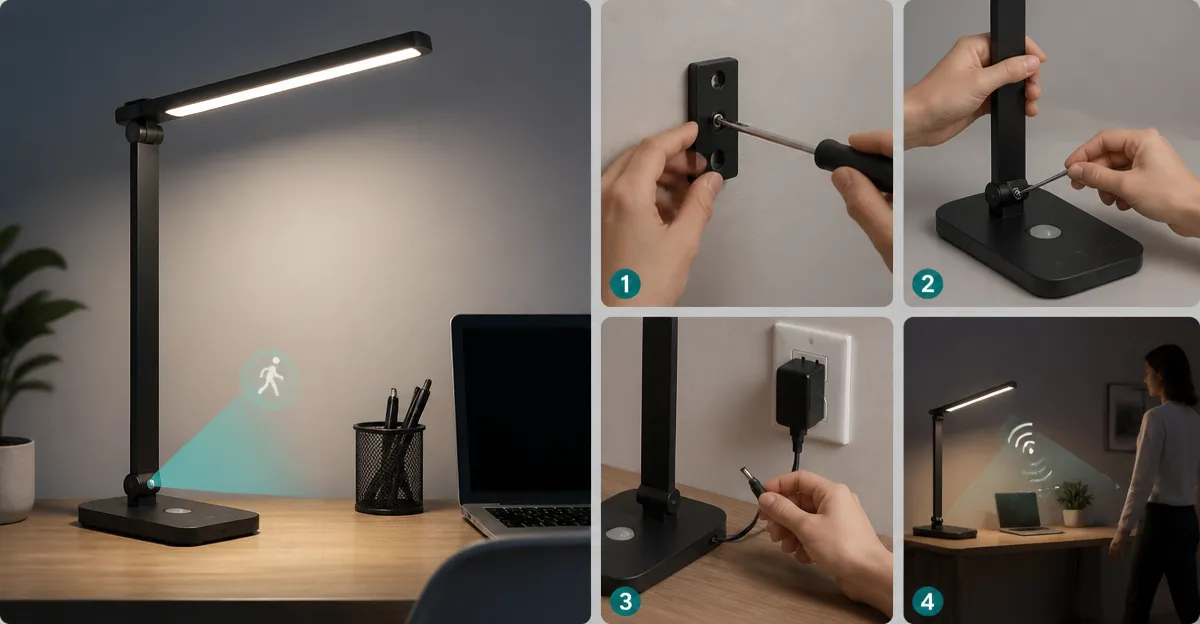
How to Install Energy‑Saving Desk Lighting with Motion Sensors: Step‑by‑Step DIY to Save Power & Money
Introduction
In modern home offices, lighting accounts for a noticeable portion of daily electricity consumption. By integrating motion‑sensor technology with efficient LED desk lamps, one can reduce idle power draw, protect eyesight, and lower utility bills. This guide explains the principles behind motion‑sensor lighting, walks you through the installation process, and recommends three high‑quality Amazon desk lamps that combine energy efficiency with advanced features such as auto‑dimming, memory recall, and high colour‑rendering index (CRI). Whether you are a remote professional, a student, or a hobbyist, you will finish with a functional, eye‑friendly workspace that automatically turns off when not in use.
What You’ll Need
- Power‑rated motion‑sensor switch (12 V – 120 V compatible, PIR type)
- Electrical tape, wire nuts, and a small screwdriver set
- One of the recommended LED desk lamps (see product details below)
- Optional: a voltage tester to verify safe wiring
All tools are readily available at hardware stores. The desk lamp you choose will serve as the primary light source; the motion sensor will act as the control module.
Step 1: Choose an Energy‑Efficient Desk Lamp
Selecting a lamp with built‑in power‑saving functions reduces the load on the motion sensor and maximises overall efficiency. The following options are proven performers on Amazon:
- LitONES LED Adjustable Desk Lamp – 15 W, 50 lighting modes, CRI > 97.8, height adjustable from 14" to 40", price $49.97, rating 4.8/5 (381 reviews). Its smart memory chip remembers the last brightness and colour temperature, while a 45‑minute auto‑off timer encourages regular breaks.
- PoKat Ceramic Table Lamps (Set of 2) – modern ceramic design, compact 20.75" height, ideal for bedside or small workstations, price not listed, rating 4.6/5 (862 reviews). Their low power draw and decorative appeal make them suitable for low‑intensity ambient lighting.
- Micomlan 24W Auto‑Dimming Architect Desk Lamp – five rotatable joints, 45° angled asymmetric light, CRI > 90, price $59.99, rating 4.6/5 (1,506 reviews). The auto‑dimming sensor adapts brightness to surrounding light, complementing an external motion sensor for seamless control.
For the purpose of this guide, we will use the LitONES LED Adjustable Desk Lamp because its built‑in timer and memory function work harmoniously with a motion sensor, providing layered energy‑saving mechanisms.
Step 2: Prepare the Work Area and Verify Power
Before any wiring, turn off the circuit breaker that supplies power to the outlet you will use. Use a voltage tester to confirm that the outlet is de‑energised. Clear the desk surface of clutter and place the lamp where it will receive optimal coverage—ideally centred over the primary work area to avoid shadows.
Step 3: Install the Motion‑Sensor Switch
- Remove the existing wall‑plate or outlet cover where you intend to install the sensor. Most PIR switches fit into a standard single‑gang box.
- Connect the live (black) wire from the wall to the “Line” terminal on the sensor, and the neutral (white) wire to the “Neutral” terminal. If the sensor includes a ground terminal, attach the bare copper wire accordingly.
- Secure the connections with wire nuts and wrap them with electrical tape for added safety.
- Mount the sensor housing to the box using the supplied screws. Ensure the sensor’s detection window faces the desk area without obstruction.
- Replace the cover plate and restore power at the breaker. The sensor should emit a brief LED indicator confirming activation.
The motion sensor will now detect presence within its range (typically 5‑10 ft) and trigger power to the downstream outlet.
Step 4: Wire the Desk Lamp to the Sensor‑Controlled Outlet
Plug the LitONES lamp into the outlet that is now controlled by the motion sensor. If the lamp’s cord is too short, use a short extension cord rated for 15 A, ensuring the extension does not bypass the sensor.
Because the lamp includes a 45‑minute auto‑off timer, it will automatically switch off after the set period of inactivity, even if the motion sensor remains powered. This dual‑layer protection maximises energy savings.
Step 5: Configure Lamp Settings for Optimal Efficiency
- Turn on the lamp and use the touch panel to select a moderate brightness level (e.g., 40 %). Higher brightness consumes more wattage without proportionate benefit for typical desk tasks.
- Select a colour temperature of 4000 K to 5000 K, which mimics natural daylight and reduces eye strain during prolonged work.
- Activate the smart memory function by setting your preferred mode, then press the power button to store the setting. The lamp will recall this configuration each time power is restored by the motion sensor.
These adjustments, combined with the sensor’s presence detection, can reduce average daily lamp usage by up to 70 % compared with a continuously powered lamp.
Step 6: Test the System
- Leave the desk area and wait for the sensor’s timeout (usually 30‑60 seconds). The lamp should turn off automatically.
- Return to the desk; the sensor should detect motion and power the lamp back on within a second.
- Observe the lamp’s auto‑off timer: after 45 minutes of continuous use without movement, the lamp will shut off even if the sensor still senses presence. This prevents unnecessary power draw during long reading sessions where the user remains still.
If any step fails, review the wiring connections in Step 3 and ensure the sensor’s detection range is not blocked by objects such as monitors or books.
Tips & Pro Tips
- Placement matters: Position the sensor at a height of 6‑7 ft and angle it slightly downward to cover the entire desk surface without blind spots.
- Combine with natural light: When daytime illumination is sufficient, set the lamp to its lowest brightness; the sensor will still turn it off during periods of inactivity, preserving daylight energy.
- Use a surge protector: Connect the lamp through a quality surge protector to safeguard the LED circuitry from voltage spikes.
- Upgrade the sensor: Some PIR switches allow sensitivity adjustment. Lower sensitivity reduces false triggers from pets, while higher sensitivity ensures quick response for brief movements.
- Maintain the lamp: Dust the soft‑panel of the LitONES lamp regularly; accumulated dust can diminish light diffusion and increase perceived brightness, causing users to raise the intensity unnecessarily.
Troubleshooting
| Problem | Possible Cause | Solution |
|---|---|---|
| Lamp does not turn on when motion is detected | Sensor wiring error or disabled sensor | Turn off power, verify line and neutral connections, and ensure the sensor’s toggle switch (if present) is set to “ON”. |
| Lamp stays on continuously | Sensor’s detection range is blocked | Re‑position the sensor so the infrared field is unobstructed; clean any dust on the sensor window. |
| Flickering light | Loose wire nut or incompatible extension cord | Tighten all connections and use a cord rated for the lamp’s wattage. |
| Auto‑off timer does not activate | Memory function overridden | Reset the lamp by unplugging for 10 seconds, then re‑configure the timer setting. |
Conclusion
By following this step‑by‑step guide, you have installed a motion‑sensor‑controlled, energy‑saving desk lighting system that automatically adapts to your presence and work habits. The combination of a high‑CRI LED lamp, a built‑in auto‑off timer, and a PIR sensor reduces idle power consumption, protects your eyes, and contributes to lower electricity costs. Regular maintenance and occasional recalibration of the sensor will keep the system performing optimally for years to come.
Products Mentioned in This Guide
Frequently Asked Questions
What type of motion‑sensor switch is required for desk lighting?
A PIR‑type switch rated for 12 V–120 V that can handle the lamp's wattage is recommended.
Do I need any special tools to install a motion‑sensor desk lamp?
A small screwdriver set, electrical tape, wire nuts, and optionally a voltage tester are sufficient.
How does a motion‑sensor lamp save energy?
It automatically dims or turns off when no movement is detected, eliminating idle power draw.
Can I use any LED desk lamp with the sensor switch?
The lamp must be compatible with the switch’s voltage range and have a simple on/off wiring configuration.
What are the key features to look for in a recommended desk lamp?
Look for LED lamps with auto‑dimming, memory recall, high CRI, and energy‑efficient drivers.