How to Create a Remote Standing Desk Onboarding Checklist for Employers: Complete Step‑by‑Step Guide for Ergonomics, Compliance & Productivity
Introduction
Employers are increasingly expected to support the health and productivity of remote workers. This guide explains how to design an onboarding checklist that ensures every remote employee receives a safe, ergonomic standing‑desk setup. By following the steps, organizations can meet occupational health standards, reduce musculoskeletal complaints, and boost overall output. The result is a consistent experience that aligns with corporate wellness policies while respecting individual workspace constraints.
What You'll Need
- Measuring tape or laser distance meter
- Leveling tool (spirit level)
- Basic assembly tools (screwdriver, allen wrench – often included with desks)
- Internet connection for product research and video calls
- Recommended ergonomic equipment (standing desks, monitor risers, cable management)
All of the recommended equipment can be purchased through the Amazon links provided later in the guide.
Step 1: Conduct a Remote Workspace Survey
The first action is to gather precise measurements of each employee's home office. Send a short questionnaire that asks for room dimensions, floor type, existing furniture, and any load‑bearing limitations. Request a photo of the current desk area so the ergonomics specialist can evaluate space‑saving options. This data enables you to match the appropriate standing‑desk solution to the employee's environment.
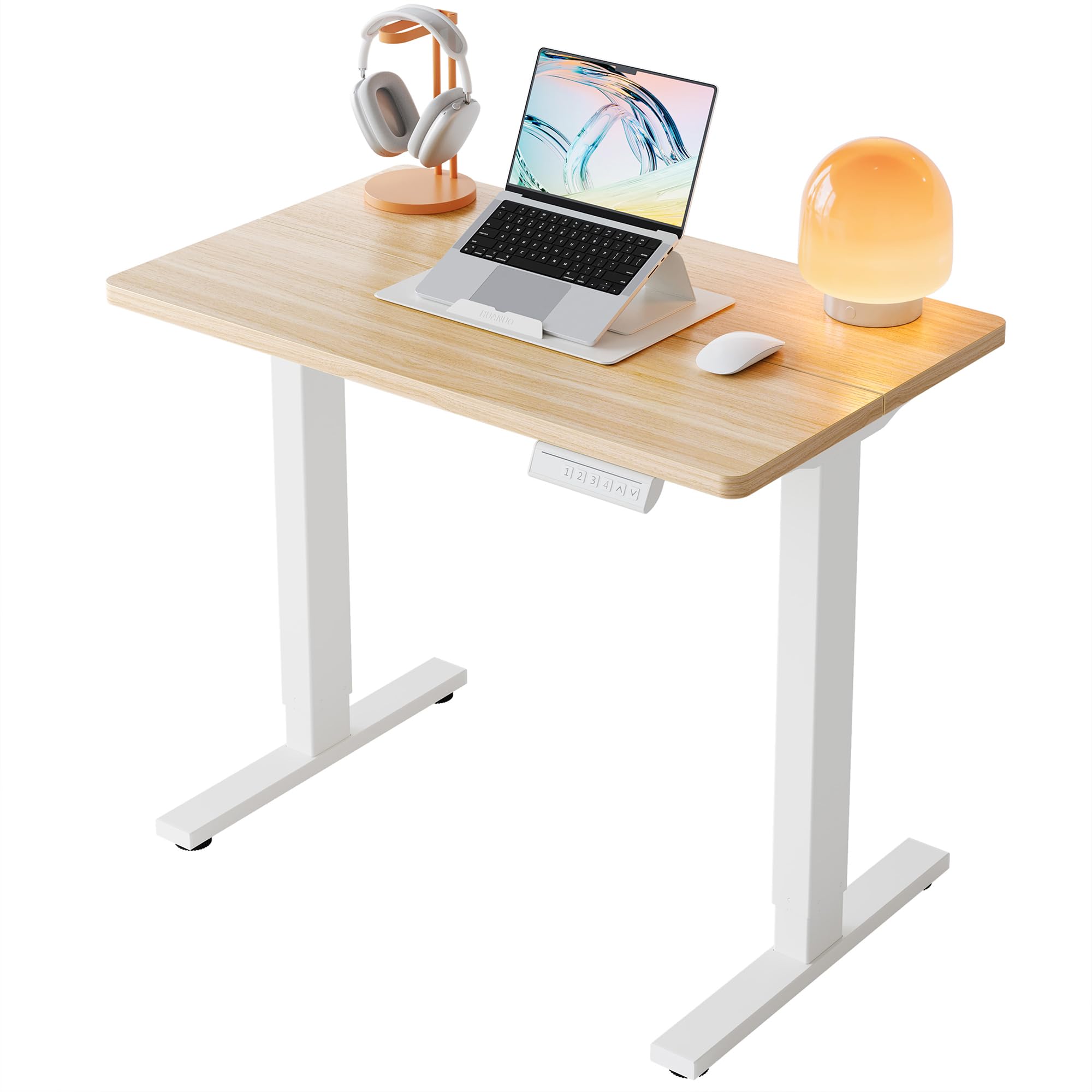
When the survey reveals a compact room (under 6 ft²), recommend the HUANUO 32" Electric Standing Desk. Its 32" x 19" footprint fits tight corners while still offering a height range of 28.3" to 46.5". The desk supports up to 176 lb, which accommodates dual monitors and a laptop without compromising stability. The four memory presets simplify daily adjustments, allowing remote workers to alternate between sitting and standing with a single button press.
Step 2: Verify Load Capacity and Power Requirements
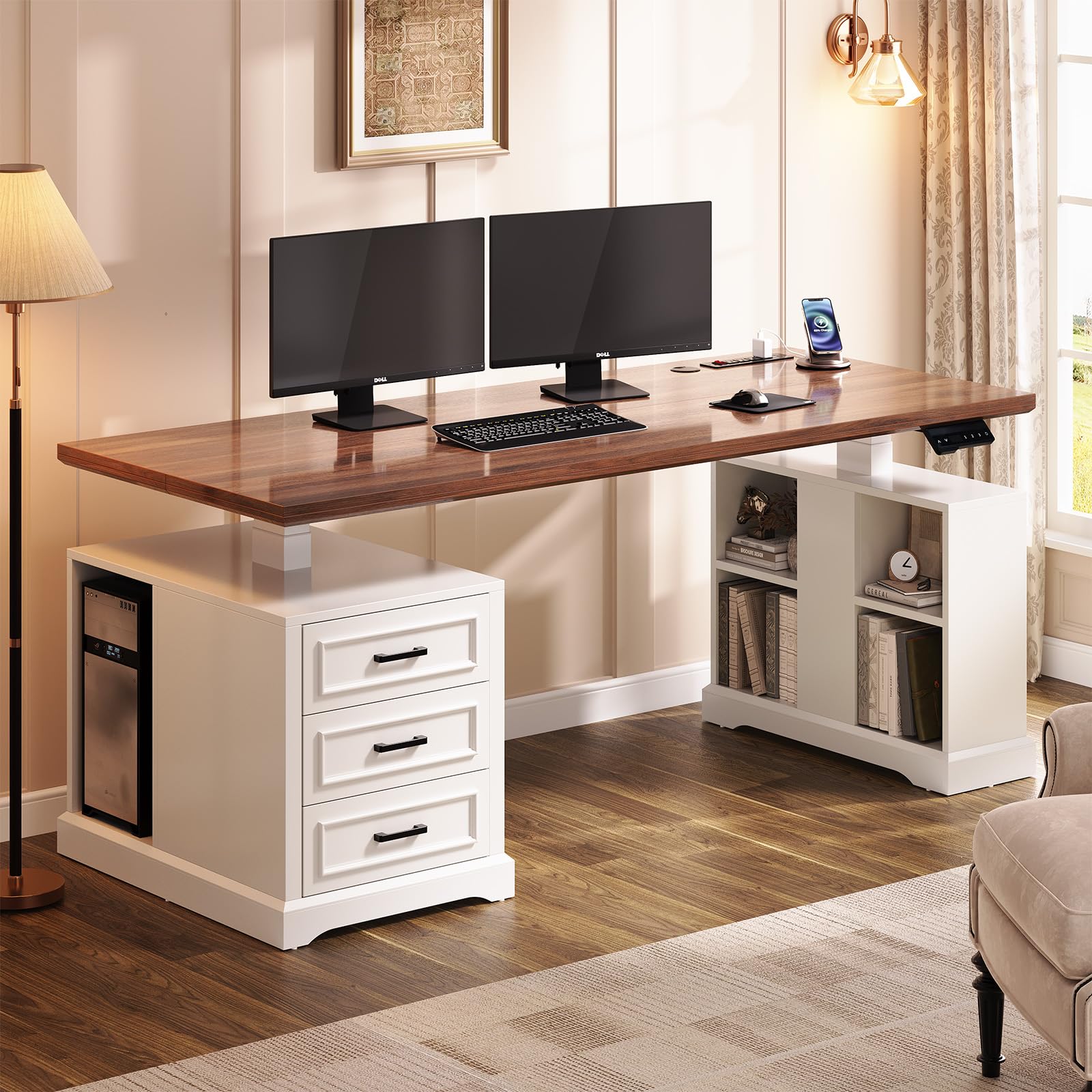
After selecting a desk model, confirm that the employee's equipment does not exceed the desk's maximum load. For most home offices, a dual‑monitor setup, a keyboard, and a webcam weigh well under the 176 lb limit of the HUANUO desk. If the employee requires additional power outlets, the SEDETA 63" Farmhouse Standing Desk includes a built‑in power strip with four AC outlets and two USB ports, eliminating the need for external surge protectors.
The SEDETA desk also offers a higher weight capacity and a spacious 63" surface, making it ideal for users with heavy equipment such as desktop PCs or large drafting tools. Its robust steel frame and reinforced wood top ensure stability even at the highest setting (47"). By matching load capacity to the employee's hardware, you reduce the risk of desk wobble, which can cause strain and distraction.
Step 3: Choose Between Full‑Size Desk and Desk Converter
Not every remote worker has the floor space or budget for a full‑size standing desk. In such cases, a desk converter like the VIVO 32" Desk Converter Riser provides an economical alternative. The riser sits on an existing tabletop, offering a 31.5" x 15.7" work surface and a synchronized keyboard tray that moves in unison with the top.
The VIVO converter can hold up to 33 lb on the main platform, which is sufficient for a monitor and a laptop. Its smooth lift‑assist mechanism requires only a light touch, making it accessible for users with limited hand strength. Because the converter does not require floor anchoring, it can be relocated easily, supporting employees who share a workspace or move frequently.
Step 4: Assemble the Desk Safely and Efficiently
Provide employees with a step‑by‑step assembly video that highlights critical safety points. Emphasize the importance of a level surface; an uneven floor can cause the desk to tilt, leading to ergonomic strain. For the HUANUO and DUMOS desks, the included hardware and pre‑labeled parts enable tool‑free assembly in under 30 minutes.
The DUMOS 40" Electric Standing Desk exemplifies rapid setup with its tool‑free design and clear instructions. Its dual‑panel desktop measures 40" x 24", providing ample room for a dual‑monitor configuration while still fitting in a modest home office. The quiet motor (under 55 dB) ensures that the assembly process does not disturb household members or conference calls.
Step 5: Configure Ergonomic Settings
Once the desk is assembled, guide the employee through proper ergonomic adjustments. The monitor top should be at or slightly below eye level, the keyboard height should allow elbows to rest at a 90‑degree angle, and the screen distance should be an arm's length away. Encourage the use of the desk's memory presets to switch between sitting and standing heights that align with these parameters.
For the SEDETA desk, the integrated LED display shows the exact height, and the three programmable presets can be set for seated, transitional, and fully standing positions. The built‑in power strip keeps cables organized, reducing the temptation to create a tangled workspace that could lead to tripping hazards.
Step 6: Implement a Usage Schedule and Monitoring Plan
Research suggests that alternating between sitting and standing every 30‑45 minutes maximizes health benefits. Include a recommended schedule in the onboarding checklist and provide a simple spreadsheet or mobile reminder app for tracking compliance. Managers should review usage logs during monthly wellness check‑ins to identify any barriers.
If employees use a desk with memory presets, they can quickly log the height setting they selected, making data collection effortless. The DUMOS desk's three memory slots simplify this process, as each preset can be labeled (e.g., "Morning Sit," "Midday Stand," "Afternoon Sit"). This systematic approach demonstrates the employer's commitment to measurable ergonomic outcomes.
Step 7: Provide Training on Maintenance and Safety
Regular maintenance extends the lifespan of standing desks and preserves safety. Include a quarterly checklist that covers tightening bolts, cleaning motor tracks, and inspecting the load‑bearing frame for wear. Emphasize that the motor should not be forced beyond its rated capacity; doing so can void the warranty.
Both the HUANUO and DUMOS models have been rigorously tested for up to 50,000 lift cycles, but routine inspection ensures that the quiet motor continues to operate without audible strain. Encourage employees to report any unusual noises or wobble immediately so that technical support can intervene before a failure occurs.
Tips & Pro Tips
- Cable Management: Use zip ties or a cable tray to keep power cords off the floor, reducing trip risk and maintaining a tidy aesthetic.
- Anti‑Fatigue Mats: Pair any standing desk with a high‑density mat to lessen foot and lower‑back fatigue during prolonged standing periods.
- Monitor Arms: For users with limited desk depth, a clamp‑on monitor arm frees up surface area while allowing precise height and angle adjustments.
- Ergonomic Training: Offer a short video that demonstrates correct posture, wrist alignment, and eye‑level screen positioning.
Troubleshooting
Desk wobbles at maximum height: Verify that the floor is level and that all bolts are tightened according to the manufacturer's torque specifications. If wobble persists, consider adding a stabilizing foot pad.
Motor stalls or makes excessive noise: Ensure the weight on the desk does not exceed the stated limit (176 lb for HUANUO and DUMOS, 200 lb for SEDETA). Reduce load or redistribute equipment evenly across the surface.
Converter does not stay at the desired height: Check that the locking lever is fully engaged. If the mechanism slips, tighten the adjustment screw located on the side of the riser.
Conclusion
Creating a remote standing‑desk onboarding checklist equips employers with a repeatable process that safeguards employee health, fulfills compliance obligations, and drives productivity. By surveying workspaces, selecting the appropriate desk, ensuring safe assembly, and establishing clear usage protocols, organizations can deliver a consistent ergonomic experience across dispersed teams. The recommended products—HUANUO 32" Electric Standing Desk, SEDETA 63" Farmhouse Standing Desk, DUMOS 40" Electric Standing Desk, and VIVO 32" Desk Converter Riser—provide reliable, budget‑friendly solutions that align with the checklist steps, but the framework remains valuable even without purchase.
Products Mentioned in This Guide
Frequently Asked Questions
What key elements should be included in a remote standing‑desk onboarding checklist?
List the ergonomic assessment, equipment inventory, setup instructions, safety checks, and compliance documentation.
How can employers verify that a remote employee’s standing desk is ergonomically correct?
Use a video call to guide the employee through measuring monitor height, desk angle, and posture, and have them confirm levelness with a spirit level.
What basic tools are needed for employees to assemble a standing desk at home?
A measuring tape or laser, a spirit level, and the screwdriver/allen wrench that typically comes with the desk.
Why is a standing‑desk onboarding checklist important for compliance?
It helps meet occupational health standards and provides documented proof that the employer addressed ergonomic safety for remote workers.
Can the checklist accommodate different home workspace constraints?
Yes, it includes flexible guidelines for desk placement, cable management, and optional accessories to adapt to varied room sizes.