
Standing Desk Setup for Night-Shift Workers in Small Apartments: The Complete Guide to Ergonomic, Quiet, Space-Saving Solutions
Introduction
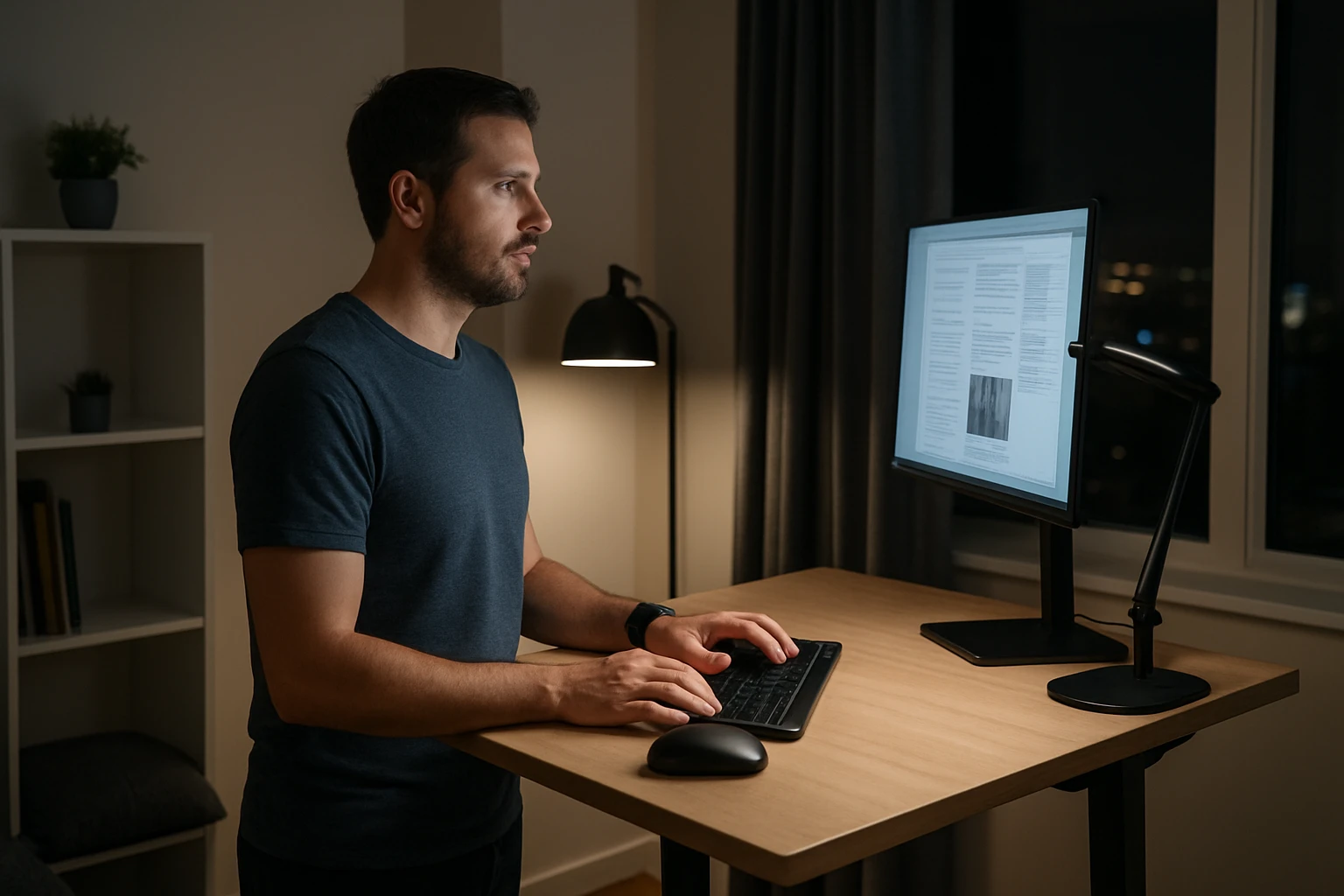
Night‑shift professionals often face unique challenges when configuring a home office in a limited living space. They require a workstation that supports prolonged alertness, minimizes noise for roommates, and occupies minimal floor area. This guide explains how to design an ergonomic standing‑desk setup that meets those constraints while highlighting a product that exemplifies the required features.
Readers will learn foundational ergonomics, quiet‑room considerations, space‑saving strategies, and a systematic method for selecting the right desk. Practical tips, a comparison matrix, and a concise FAQ conclude the article, ensuring that every night‑owl can implement a functional and health‑promoting workspace.
Background and Context
Research indicates that alternating between sitting and standing reduces musculoskeletal strain and improves circulation, especially during overnight work periods when the body’s natural circadian rhythm is disrupted. In addition, ambient noise can impair concentration, making a low‑noise workstation essential for shared living environments. Finally, apartments under 600 sq ft often lack dedicated office rooms, so furniture must be mobile and compact.
Key concepts include:
- Ergonomic height range: The desk surface should align with the user’s elbows when standing, typically 38–44 inches for most adults.
- Quiet mobility: Wheels with polyurethane (PU) rubber reduce floor‑contact noise.
- Space efficiency: Fold‑up or tilt‑away tabletops allow the desk to occupy a corner or be stored when not in use.
Ergonomic Foundations for Night‑Shift Workers
Ergonomics begins with proper height adjustment. A standing desk that offers a range from 30.7" to 46.4" accommodates a broad spectrum of user heights and enables a comfortable transition from sitting to standing. The desk should also support a stable work surface that does not wobble when typing or using a mouse.
In addition to height, the angle of the tabletop can affect visual comfort. A flip‑up mechanism that allows 0–90° tilt lets users angle the surface for reading documents or using a laptop stand, reducing neck strain. The desk’s load capacity—176 lb in the featured model—ensures that monitors, laptops, and accessories remain secure.
Lighting is another ergonomic factor. Night‑shift workers benefit from adjustable LED lamps that provide sufficient illumination without glare. While this guide does not focus on lighting, the desk’s open‑frame design accommodates a lamp without sacrificing stability.
Quiet and Space‑Saving Strategies
Noise reduction starts with the choice of wheels. Smooth PU rubber wheels, as found on the COMHOMA Adjustable Standing Desk, roll silently and protect hardwood or tile floors from scratches. One‑touch wheel locks keep the desk stationary during intensive tasks, preventing inadvertent movement that could generate rattling sounds.
When space is at a premium, a desk that folds or tilts away is invaluable. The flip‑up tabletop of the featured desk collapses to a vertical position, freeing floor space for other activities such as yoga or sleeping. This design also enables the desk to be stored against a wall when not in use, preserving the limited square footage of a small apartment.
Finally, consider cable management. Integrated grommets or clip‑on trays keep power cords hidden, reducing visual clutter and preventing tripping hazards in tight quarters.
Product Recommendation: COMHOMA Adjustable Standing Desk
The COMHOMA Adjustable Standing Desk exemplifies the ergonomic, quiet, and space‑saving attributes essential for night‑shift workers. Key specifications include:
- Height adjustment range: 30.7"–46.4" (five gear positions)
- Flip‑up tabletop with 0–90° tilt for versatile positioning
- PU rubber wheels with one‑touch lock for silent mobility
- Load capacity: 176 lb, double anti‑moving desktop design
- Rating: 4.6 / 5.0 from 718 reviews
- Current availability: Unavailable (stock status unknown)
Although the desk is presently out of stock, its design principles serve as a benchmark for selecting alternative models that share these features.
Comparison and Selection Guide
When evaluating standing desks for a small apartment, consider the following criteria:
| Criterion | Why It Matters | Ideal Specification |
|---|---|---|
| Height Range | Ensures ergonomic alignment for users of varying stature. | 30"–48" (minimum five adjustment steps) |
| Desktop Tilt | Allows angled work for reading or drawing, reducing neck strain. | 0–90° lockable tilt |
| Mobility Noise | Prevents disturbance to roommates during night‑shift hours. | PU rubber wheels with silent roll and lock |
| Footprint | Preserves limited floor space. | Fold‑up or compact frame (≤30" depth) |
| Load Capacity | Supports monitors, laptops, and accessories safely. | ≥150 lb |
| Customer Rating | Indicates overall satisfaction and reliability. | ≥4.5/5 from 200+ reviews |
By scoring each desk against these benchmarks, night‑shift workers can prioritize models that deliver quiet operation, ergonomic flexibility, and a minimal footprint.
Best Practices & Tips
- Gradual Transition: Begin with 30‑minute standing intervals and increase by 15 minutes each day to avoid fatigue.
- Anti‑Fatigue Mat: Place a cushioned mat under the desk to reduce pressure on the feet and improve circulation.
- Monitor Height: Use a laptop riser or monitor arm so the top of the screen is at or slightly below eye level.
- Quiet Accessories: Choose a mechanical keyboard with silent switches and a mouse pad with dampening material.
- Storage Solutions: Employ wall‑mounted shelves to keep documents off the desk surface, preserving the limited workspace.
- Lighting: Install a dimmable LED lamp with a warm color temperature (3000 K) to support night‑time alertness without disrupting sleep patterns.
Implementing these practices alongside a suitable standing desk creates a holistic environment that promotes productivity, health, and harmony with cohabitants.
Frequently Asked Questions
1. How often should I switch between sitting and standing?
Experts recommend a 1:1 ratio, such as 30 minutes standing followed by 30 minutes sitting, gradually extending standing periods as endurance improves.
2. Will the wheels damage my hardwood floor?
PU rubber wheels are designed to glide without scratching; however, placing a thin protective mat beneath the wheels adds an extra layer of safety.
3. Can I use the desk with a treadmill desk?
Yes, the height range of 30.7"–46.4" accommodates most walking‑pad setups, and the sturdy frame can bear the combined weight of the treadmill and equipment.
4. Is assembly difficult?
The desk includes a detailed instruction manual and all necessary hardware. Most users complete assembly within 30–45 minutes.
5. What if the desk arrives damaged?
The manufacturer offers a 30‑day replacement or refund and a one‑year repair warranty, ensuring that any defects are addressed promptly.
6. How do I keep the desk stable on carpet?
Engage the wheel locks and consider a carpet‑friendly mat that distributes weight evenly, preventing the desk from sinking.
7. Are there alternatives if the COMHOMA desk remains unavailable?
Look for models that match the comparison criteria—height adjustability, silent wheels, tilt capability, and a load capacity of at least 150 lb.
Conclusion
Night‑shift workers in compact apartments can achieve an ergonomic, quiet, and space‑saving workstation by prioritizing height adjustability, silent mobility, and fold‑away designs. The COMHOMA Adjustable Standing Desk illustrates these principles, serving as a reference point for alternative selections. By following the best‑practice checklist and using the comparison guide, readers can create a healthy and productive environment that respects both personal well‑being and shared living spaces.
Products Featured in This Guide

COMHOMA Adjustable Standing Desk
Price: Not listed (currently unavailable)
Rating: 4.6/5.0 from 718 reviews
Featured because it provides a wide height range, silent PU wheels, 0–90° tilt, and a high load capacity—all essential for ergonomic, quiet, and space‑saving setups in small apartments.