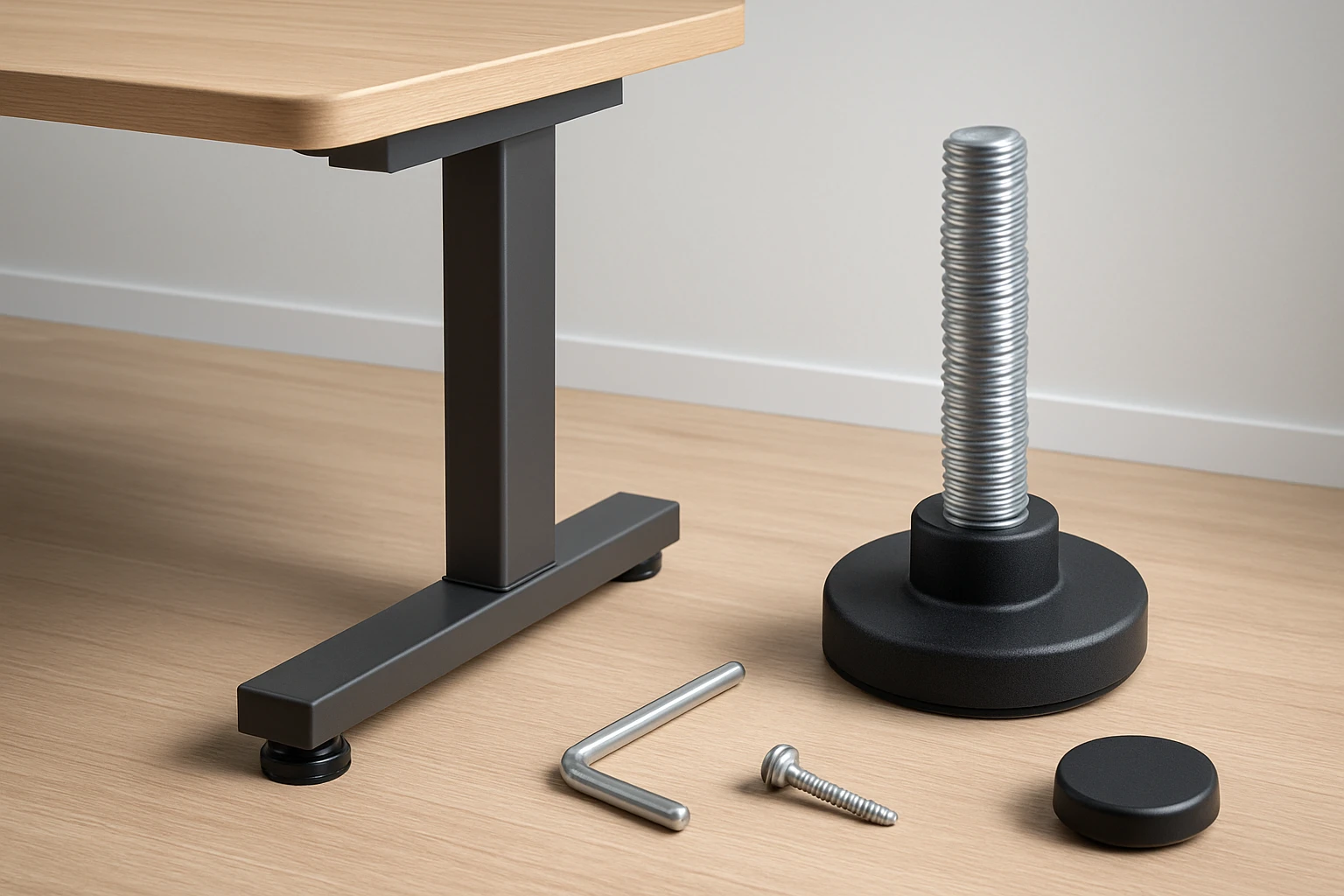
Standing Desk Leveling Feet for Uneven Floors: The Ultimate Guide
Introduction
This guide explains why leveling feet are essential for standing desks placed on uneven surfaces. Readers will learn the underlying principles of floor irregularities, how to evaluate different types of leveling solutions, and step‑by‑step installation methods. The article also provides a detailed comparison of five highly rated products, practical best‑practice tips, and answers to common questions. By the end of this guide, one will be equipped to create a stable, ergonomic workstation regardless of floor condition.
Background and Context
Uneven floors arise from construction tolerances, settled foundations, or gradual wear. Even a one‑millimeter deviation can cause a standing desk to wobble, leading to reduced comfort and potential damage to equipment. Leveling feet act as adjustable shims that compensate for height differences, distribute load evenly, and protect flooring. They are typically made from steel, aluminum, rubber, or engineered polymers, each offering distinct durability and slip‑resistance characteristics.
When selecting a leveling solution, three factors dominate: load capacity, adjustability range, and ease of installation. Load capacity must exceed the combined weight of the desk frame, desktop, and peripherals. Adjustability range determines how much floor variation can be corrected. Installation simplicity influences the time and tools required, which is critical for DIY enthusiasts.
Understanding Uneven Floors and Leveling Concepts
Floor irregularities are measured in millimeters or inches using a spirit level or laser level. The goal of a leveling foot is to raise the lower corner until the desk sits level on all four points. There are two primary categories of leveling devices: fixed shims that are trimmed to size, and adjustable feet that screw in or out to achieve the desired height.
Fixed shims, such as PROPA Flexible Plastic Shims, are made from transparent polymer and can be trimmed with scissors. They are ideal for minor adjustments and temporary setups. Adjustable feet, such as Tahikem Heavy Duty Furniture Levelers, feature a threaded screw that can be turned to raise or lower the leg precisely.
For heavy‑duty standing desks, the load capacity of the leveling device must be considered. A typical electric standing desk frame can weigh over 100 lb, and the desktop may add another 50 lb or more. Therefore, a leveling foot rated for at least 150 lb per leg is advisable.
Choosing the Right Leveling Feet for Your Standing Desk
The selection process begins with an assessment of the desk’s weight and the floor’s unevenness. If the floor deviation exceeds 1 inch, a robust adjustable foot is required. If the variation is minimal, a set of plastic shims may suffice.
Below are five products that address a range of scenarios. Each product is introduced with its key specifications, user rating, and a brief rationale for inclusion.
- ErGear Dual Motor Desk Frame – Although primarily a desk frame, it includes a built‑in cable management tray and a sturdy steel construction capable of supporting 264 lb. The frame’s stability reduces the reliance on external leveling, but pairing it with adjustable feet ensures perfect balance on uneven floors.
- Tahikem Heavy Duty Furniture Levelers – Provides a 2‑inch adjustable range, supports 100 lb per leg, and includes anti‑slip pads for floor protection. Ideal for medium‑weight desks where precise height control is needed.
- PROPA Flexible Plastic Shims – Transparent, stackable, and capable of supporting up to 22,000 lb when interlocked. Perfect for quick fixes and for users who prefer a tool‑free solution.
- Stable the Table Riser Pads – Rubber pads with an interlock design that can be stacked to address larger gaps. The pads protect hardwood floors and provide a non‑slip surface.
- Sanchamy Heavy Duty Furniture Levelers – Commercial‑grade steel levelers with a 3/8‑inch thread, supporting up to 330 lb per foot (1,320 lb total). Suitable for very heavy workstations or cabinets attached to the desk.
Installation Guide for Adjustable Leveling Feet
Before beginning, gather the necessary tools: a drill with the appropriate bit size, a screwdriver, a small hammer, and a level. The following steps apply to most threaded levelers such as the Tahikem and Sanchamy models.
- Measure the distance from the floor to the bottom of each desk leg using a ruler or digital caliper.
- Mark the drilling location on the leg base, ensuring it is centered to maintain structural integrity.
- Drill a pilot hole of 0.5 inch diameter (or as specified by the product) to a depth of 2 inch.
- Insert the supplied T‑nut into the hole and tap gently with a hammer until it sits flush.
- Screw the leveling foot onto the T‑nut, turning clockwise until the desired height is reached.
- Repeat the process for each leg, then use a spirit level on the desktop to verify that the surface is even.
For plastic shims such as the PROPA set, the process is simpler. Cut the shims to the required thickness, stack them if necessary, and slide them under the leg. No tools are required, making this method ideal for renters or temporary setups.
Adjustment and Ongoing Maintenance
After installation, periodic checks are recommended because floor conditions can shift over time. Use a level weekly to confirm that the desk remains level. If the desk settles, loosen the foot slightly, insert a thin shim, and retighten.
When cleaning, avoid abrasive cleaners on rubber pads or polymer shims, as these can degrade slip‑resistance. For steel levelers, apply a light coat of rust‑inhibiting oil if the environment is humid.
Comparison and Selection Guide
| Product | Adjustability Range | Load Capacity per Leg | Material | Price (USD) | Rating |
|---|---|---|---|---|---|
| Tahikem Heavy Duty Furniture Levelers | 0.75" – 1.5" | 100 lb | Hard plastic with steel T‑nut | 9.99 | 4.6/5 (619 reviews) |
| PROPA Flexible Plastic Shims | Stackable up to 22,000 lb | Variable (depends on stack) | Transparent polymer | 8.98 | 4.6/5 (191 reviews) |
| Stable the Table Riser Pads | Stackable, each 0.125" thick | Not specified (rubber compound) | Rubber | 13.95 | 4.7/5 (324 reviews) |
| Sanchamy Heavy Duty Furniture Levelers | 0.75" – 1.75" | 330 lb per foot (1,320 lb set) | Steel with felt pad | 13.95 | 4.6/5 (477 reviews) |
| ErGear Dual Motor Desk Frame | 28" – 47" height range (frame) | 264 lb | Steel | 189.99 | 4.7/5 (466 reviews) |
When selecting a product, match the adjustability range to the measured floor deviation, and ensure the load capacity exceeds the total desk weight. For most home office setups, the Tahikem levelers provide a balanced combination of adjustability and price. For industrial‑strength needs, the Sanchamy levelers are the most robust option.
Best Practices & Tips
- Measure floor unevenness at multiple points; a single measurement may miss localized dips.
- Start with the smallest adjustment and increase gradually; overtightening can damage the desk leg.
- Use a level placed on the desktop surface rather than on the frame to verify true levelness.
- When using rubber pads, ensure the surface is clean and dry to maximize grip.
- Document the final screw settings for each foot; this simplifies future re‑adjustments.
Frequently Asked Questions
- Can I use plastic shims with a heavy steel desk frame?
- Yes, provided the shims are stacked to achieve the required load capacity. The PROPA shims can interlock to support very high weights when multiple pieces are used.
- Do leveling feet damage hardwood floors?
- Most products include a felt or rubber pad that distributes pressure evenly and prevents scratches. Always verify that the pad is intact before installation.
- How often should I re‑check the level of my desk?
- It is advisable to check quarterly, or after moving heavy equipment, because floor settling can occur over time.
- Is a drill required for all adjustable levelers?
- Threaded levelers such as the Tahikem and Sanchamy models require a pilot hole for the T‑nut. Plastic shims and rubber pads do not require any tools.
- Can I use these products on carpeted floors?
- Rubber pads and felt‑lined levelers work well on carpet, but ensure the pad is large enough to prevent the leg from sinking into the fibers.
Conclusion
Leveling feet are a critical component for achieving a stable and ergonomic standing desk on uneven floors. By understanding floor variance, selecting a product with appropriate load capacity, and following a precise installation routine, one can eliminate wobble, protect flooring, and extend the lifespan of the workstation. The products highlighted in this guide represent a spectrum of solutions from inexpensive shims to heavy‑duty steel levelers, ensuring that every user can find a suitable option.
Products Featured in This Guide
ErGear Dual Motor Desk Frame
Price: $189.99 | Rating: 4.7/5 (466 reviews)
Featured because its robust steel construction and high weight capacity complement leveling solutions for heavy standing desks.
Tahikem Heavy Duty Furniture Levelers
Price: $9.99 | Rating: 4.6/5 (619 reviews)
Featured for its adjustable 2‑inch range, anti‑slip pads, and 100 lb per leg capacity, making it ideal for most home office desks.
PROPA Flexible Plastic Shims
Price: $8.98 | Rating: 4.6/5 (191 reviews)
Featured for its transparent, stackable design and tool‑free installation, suitable for quick fixes and low‑load scenarios.
Stable the Table Riser Pads
Price: $13.95 | Rating: 4.7/5 (324 reviews)
Featured for its rubber anti‑slip material and interlock capability, allowing users to stack pads for larger height corrections.
Sanchamy Heavy Duty Furniture Levelers
Price: $13.95 | Rating: 4.6/5 (477 reviews)
Featured for its commercial‑grade steel construction, 330 lb per foot capacity, and wide adjustment range, suitable for very heavy workstations.